

One of my favorite summer and fall treats are making and eating smore’s. I quit eating them years ago because of all the bad ingredients (the typical ones from the store) they have in them. You and your family are going to love this recipe for From Scratch S’mores with Maple Infused Marshmallows and Homemade Graham Crackers.
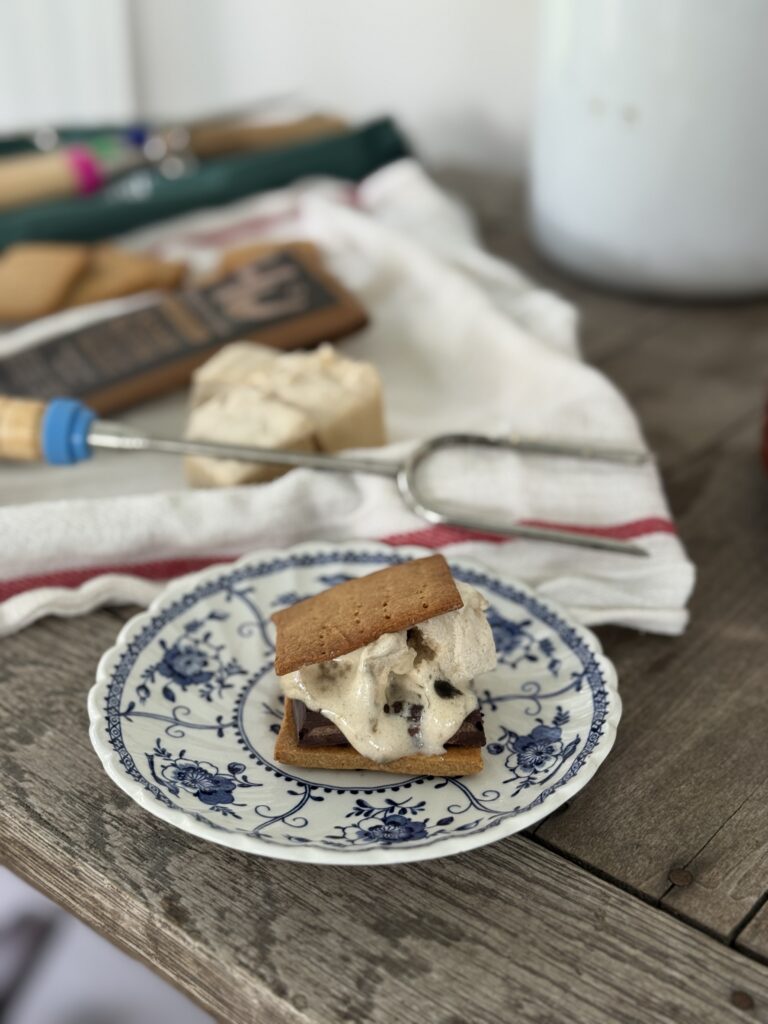
History of S’mores
The history of marshmallows dates back to 2000 BC with the Egyptians using . It’s pretty interesting that these yummy marshmallows started with the root of the marshmallow plant (yes, it’s a real plant). Here’s a look at where this yummy dessert all began and how it has evolved over the years.
Origins in Campfire Traditions: The concept of toasting marshmallows over a fire likely predates the s’more itself, as marshmallows became commercially available in the late 19th century. By the early 1900s, campfires were a staple of American outdoor recreation, especially among groups like the Girl Scouts and Boy Scouts, who popularized campfire treats.
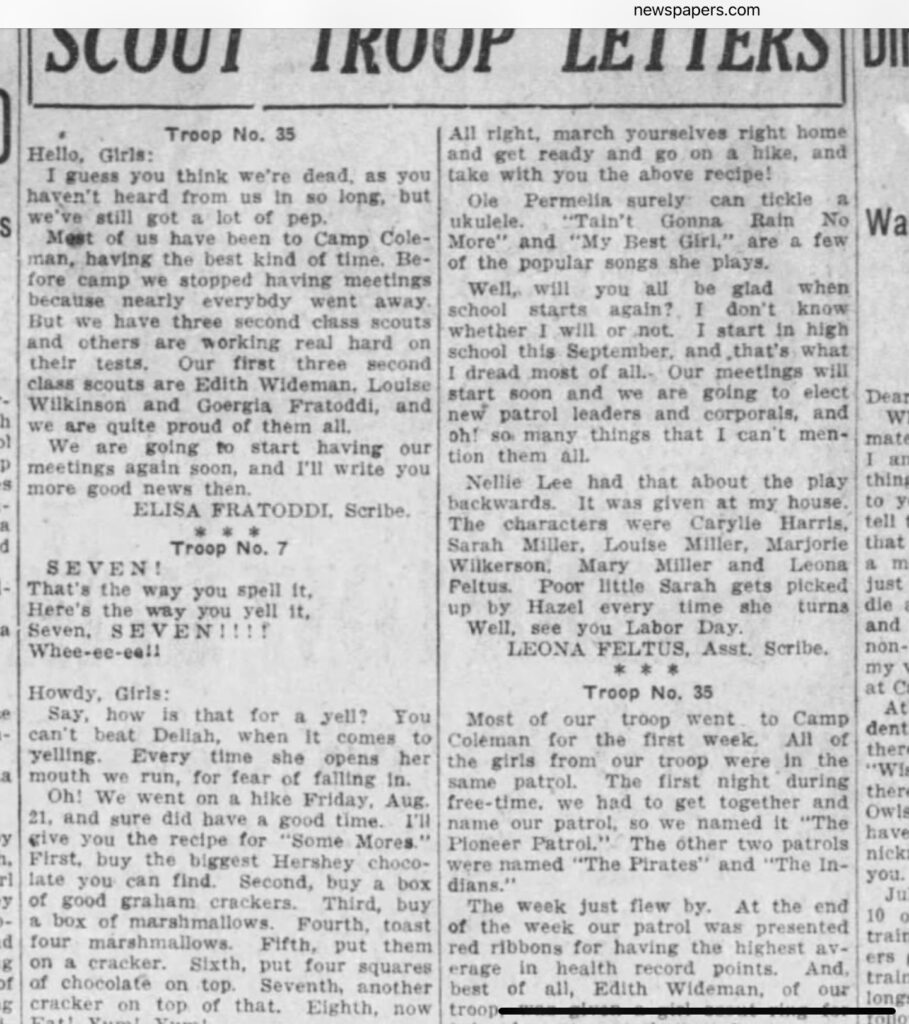
First Documented Recipe (1920s): The earliest known s’more recipe appeared in the 1927 Girl Scouts handbook Tramping and Trailing with the Girl Scouts under the name “Some More.” It described the now-classic combo: a roasted marshmallow and a chocolate bar sandwiched between two graham crackers. The name “s’more” is a contraction of “some more,” reflecting the treat’s addictive quality—people always wanted more. See a screenshot of an article noting how they made them. How cool is this?
Ingredients’ of S’mores Backstory:
Marshmallows: These fluffy treats were mass-produced by the early 1900s, thanks to advances in gelatin production. They were a novelty at the time, making them a fun campfire staple.
Graham Crackers: Invented in the 1820s by Sylvester Graham, a health food advocate, these mildly sweet crackers were originally part of a bland vegetarian diet but became a versatile snack by the 20th century.
Chocolate: Hershey’s milk chocolate bars, introduced in 1900, were affordable and widely available, making them the go-to choice for s’mores by the 1920s.
Cultural Rise (1930s–1950s): S’mores gained traction as camping and outdoor activities boomed in the U.S. The treat’s simplicity—portable ingredients, no baking required—made it a hit at summer camps, backyard fires, and beach bonfires. By the 1930s, recipes for s’mores appeared in various cookbooks and magazines, cementing its status as a nostalgic American treat.
Commercialization and Variations (Late 20th Century): As s’mores grew in popularity, brands capitalized on the trend. In the 1950s and 60s, companies like Kraft (with Jet-Puffed marshmallows) and Hershey’s marketed their products as s’mores essentials. Variations emerged, like using peanut butter or different chocolates, but the classic recipe held strong.
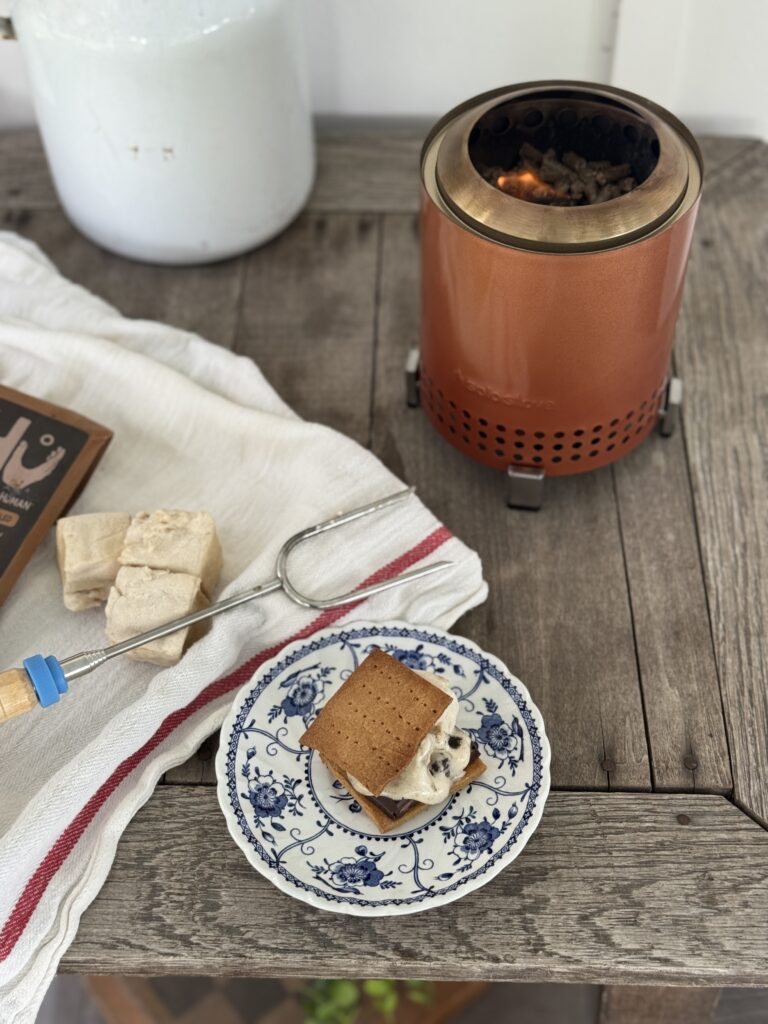
Modern S’mores (21st Century): Today, s’mores are a tradition that we as Americans have come to love over the years. What started out as sitting around the campfire, they now have these cute little tabletop stoves (like I have) you can roast your marshmallows on. I’ve even seen a few restaurants that have put gourmet spins on s’mores, using artisanal marshmallows or flavored chocolates, cooked on cast iron skillets.
What Makes Up a S’more?
The s’more is made up of three components- graham crackers, marshmallows and chocolate. I’ve seen a lot of varieties out there but this is the classic version.
Graham Crackers
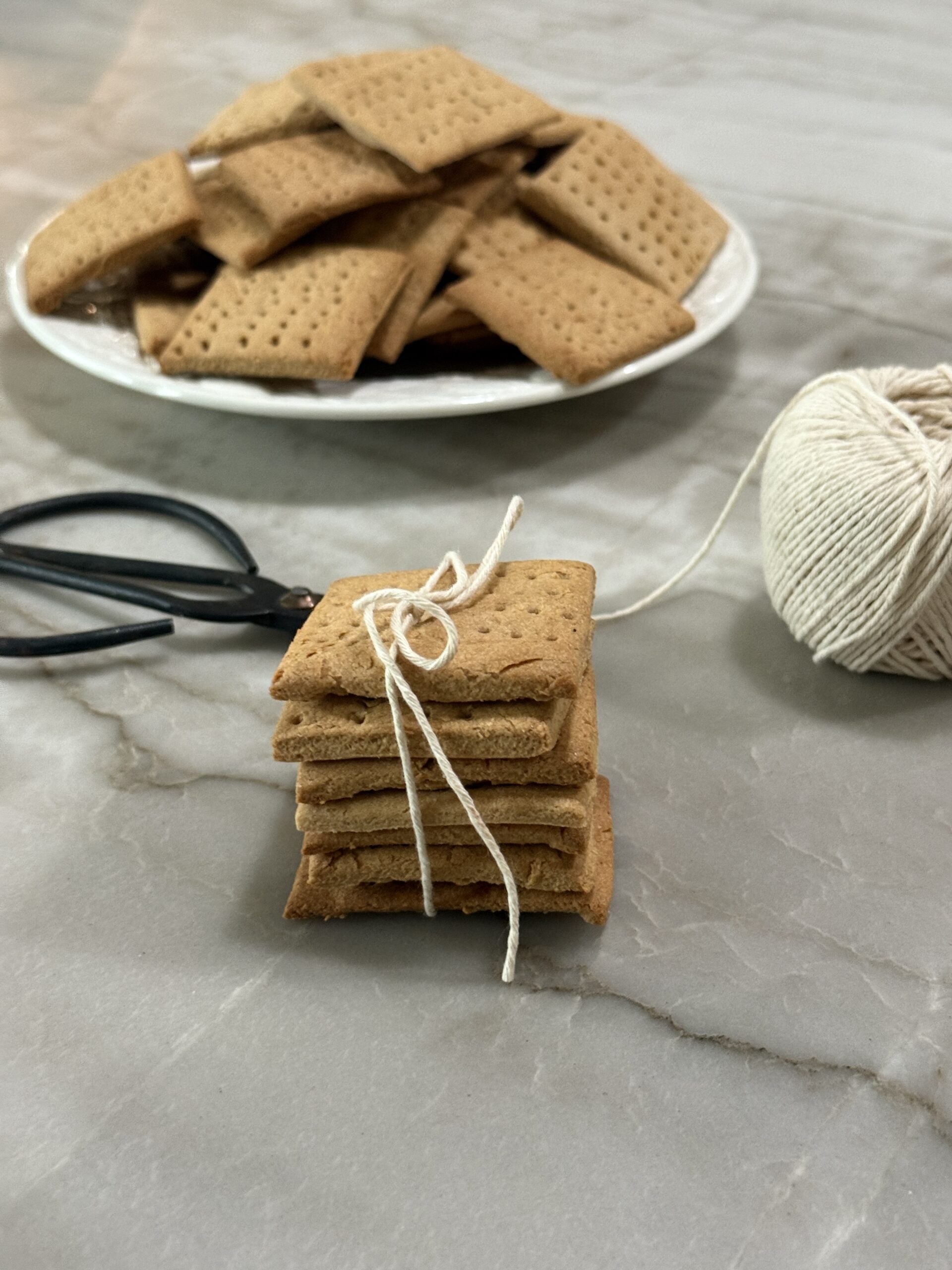
Let’s start with the crunchy crispy part. The graham crackers are also what hold the marshmallows and chocolate together. I love the slight cinnamon taste every time you bite into one. Here are the ingredients in these and you can find the recipe below.
- Fresh milled soft white wheat flour
- Coconut sugar
- Baking powder
- Ground cinnamon
- Sea salt
- Raw local honey
- Milk (I’m using raw dairy)
- Vanilla extract
- Grass-Fed Butter (Melted)
Join Our Simple Living Community


Store Bought Graham Crackers
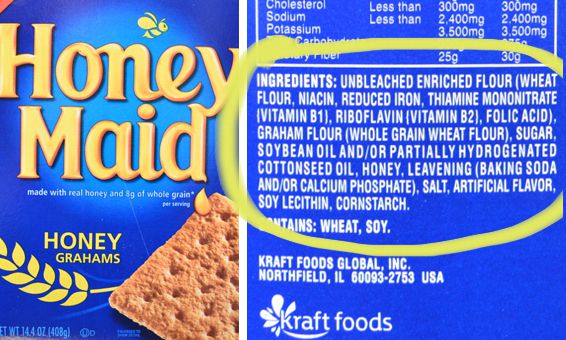
Now, let’s see what is in these store bought graham crackers:
The first ingredient I see that is not healthy, is the “enriched” flour. They’ve added synthetic vitamins into the flour. Learn how to grind your own flour here. Next is the white sugar, seed oils, soy lecithin and artificial flavor. The one thing they did add is honey haha.
Graham Crackers Using Fresh Milled Flour
These crackers have wholesome ingredients, the perfect crunch and a light taste of cinnamon. You and your family will love them!
Homemade Marshmallows
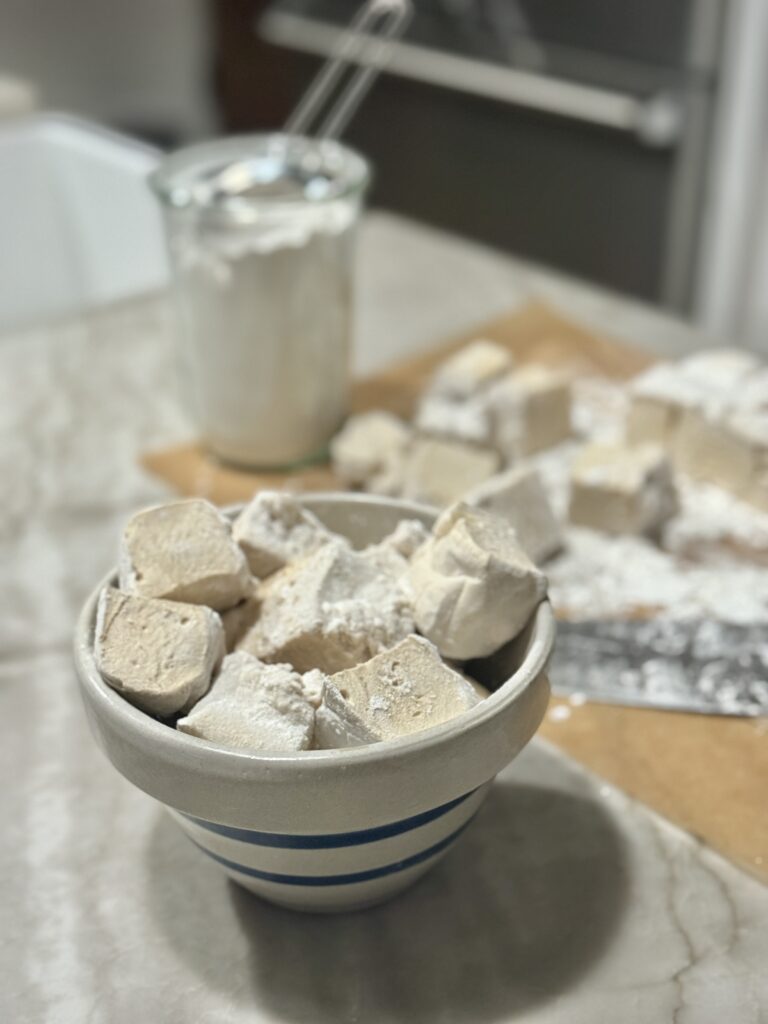
I am obsessed with these Homemade Marshmallows. They are so fluffy and did I mention they have grass-fed gelatin (unflavored) in them as well? So, good for us. Plus, they are made with marshmallow root just like they were originally made with back in the day.
Ingredients:
- Marshmallow root powder
- Local raw honey
- Maple syrup
- Water
- Gelatin (grass-fed, unflavored)
- Vanilla Extract
- Salt
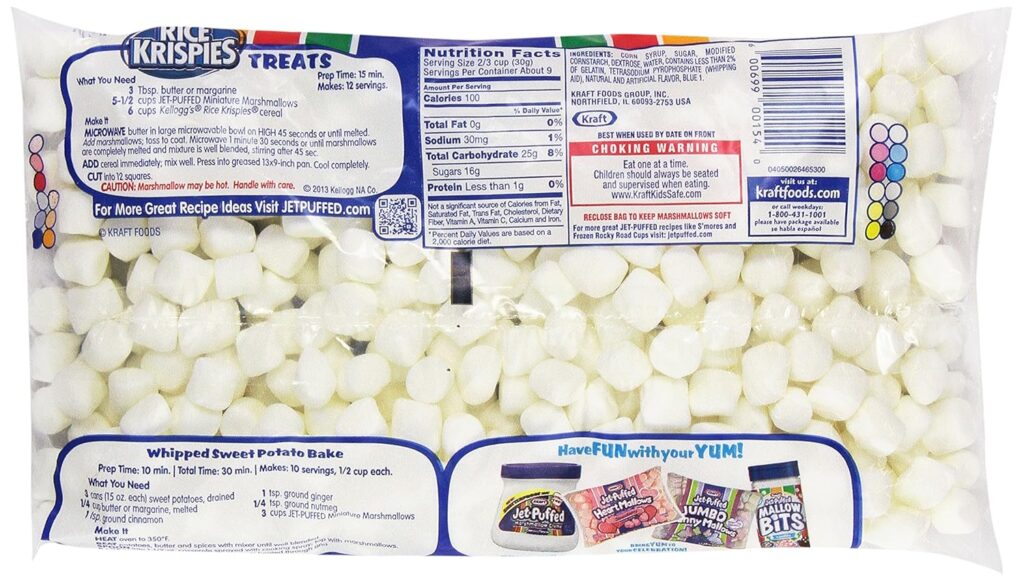
Let’s see what are in these store bought marshmallows. Here is an image I found online of the white marshmallows. The ones that have the colored marshmallows in them, are loaded with all the food dyes (known to be making us sick).
After reading the bag, I can’t believe I ever ate these haha. There is nothing good in this bag. Don’t come at me, but no one should be eating these. The white bag (even though these are the mini’s) has corn syrup, modified cornstarch, dextrose, tetrasodium pyrophosphate, natural and artificial flavor and blue #1 (why do white marshmallows need blue dye?)
What is Tetrasodium Pyrophosphate ?
Tetrasodium pyrophosphate (TSPP), also known as sodium pyrophosphate, is a chemical compound with the formula Na₄P₂O₇. It’s a colorless, crystalline salt used in various industrial and food applications. Here’s a quick breakdown:
• Food Industry: Acts as an emulsifier, stabilizer, or buffering agent. Commonly found in processed foods like canned tuna, crabmeat, or instant puddings to improve texture, prevent moisture loss, or adjust pH. It’s generally recognized as safe by the FDA when used within limits.
• Industrial Uses: Used in detergents and cleaning products as a water softener, helping to remove calcium and magnesium ions. Also found in toothpaste as a tartar-control agent and in ceramics or metal processing.
• Properties: Soluble in water, insoluble in alcohol, and forms a hydrate (Na₄P₂O₇·10H₂O). It’s derived from phosphoric acid and can release phosphate ions in solution.
• Safety: Generally safe in small amounts, but excessive consumption may lead to digestive issues or nutrient imbalances due to its phosphate content.
Blue Dye #1
Brilliant Blue FCF (FD&C Blue No. 1) is a synthetic triarylmethane dye with the chemical formula C₃₇H₃₄N₂Na₂O₉S₃. Here’s what it’s made of at the molecular level:
• Chemical Structure: It consists of a complex organic molecule with three aromatic (benzene) rings connected by a central carbon atom, characteristic of triarylmethane dyes. The structure includes:
Carbon (C): 37 atoms, forming the backbone of the aromatic rings and side chains.
Hydrogen (H): 34 atoms, bonded to the carbon atoms in the rings and alkyl groups.
Nitrogen (N): 2 atoms, part of the amino groups that contribute to the dye’s color properties.
Sodium (Na): 2 atoms, present as part of the sulfonate groups’ counterions.
Oxygen (O): 9 atoms, found in the sulfonate groups (-SO₃⁻).
Sulfur (S): 3 atoms, part of the sulfonate groups that enhance water solubility.
Key Functional Groups:
Sulfonate groups (-SO₃Na): These make the dye water-soluble and stable, allowing it to dissolve easily in food and cosmetic products.
Ethyl and methyl groups: Attached to the nitrogen atoms, these contribute to the dye’s stability and color intensity.
Azo-like chromophore: The conjugated system of double bonds and aromatic rings absorbs specific wavelengths of light, producing the blue color.
Production: It’s synthesized industrially from petroleum-derived precursors through a series of chemical reactions, including sulfonation and condensation of aromatic compounds like benzaldehyde derivatives. The exact process is proprietary but involves creating the triarylmethane structure and adding sulfonate groups to ensure solubility.
Homemade Marshmallows
These marshmallows are softy, fluffy and infused with local raw honey, maple syrup and real vanilla extract. You will never go back to buying the bagged marshmallows once you try these.
Pin For Later
Items Used in This Recipe
FAQ
- Do marshmallows and graham crackers freeze well? Yes, I do this quite often so I don’t have to make a fresh batch all the time. The graham cracker dough can be frozen up to 2 months. Wrap in plastic wrap and place in a ziploc bag. Make sure you mark the date on the bag. The baked crackers can all be frozen for the same amount of time. As far as the marshmallows go, place them in an airtight container or freezer-safe resealable bag. Layer with parchment paper if stacking to avoid sticking. They will stay fresh in the freezer for 2 months.
What Chocolate to Use?
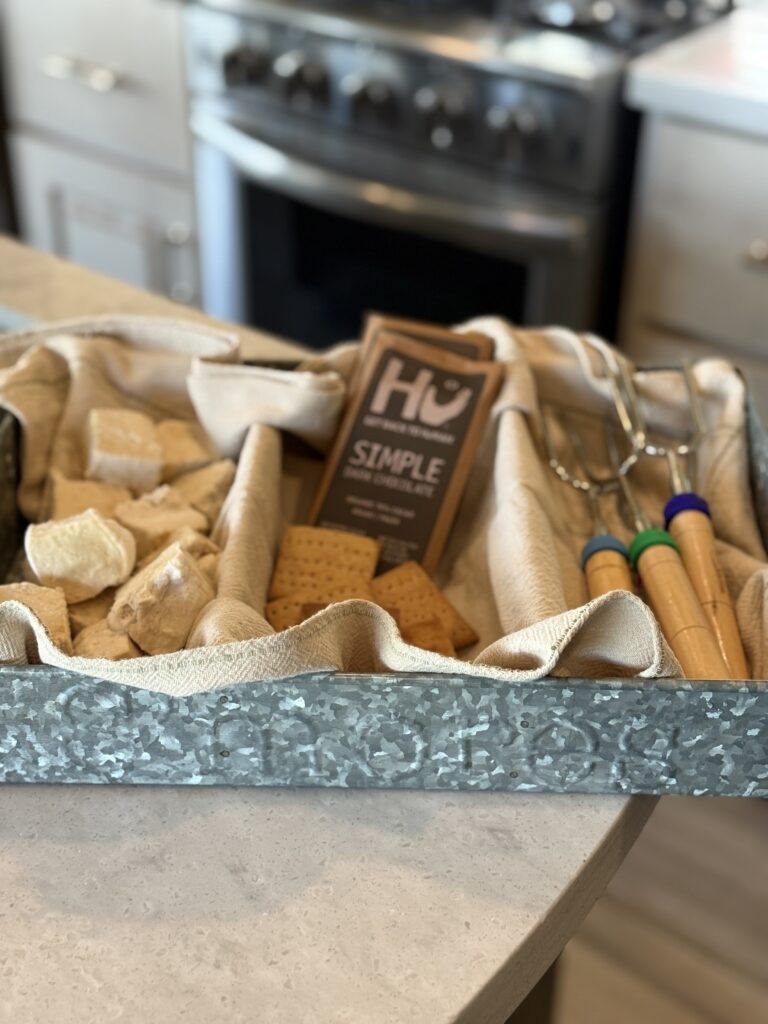
Any chocolate can be used but I like buying the kind that doesn’t have white sugar or fillers in it. I know traditionally, Hershey milk chocolate bars is what is used. In continuing my efforts to eat more clean, I opt out of those anymore. I love these amazing bars made with coconut sugar, cacao, grass-fed milk and cocoa butter. Pretty simple and these are delicious. Try to find them at your local store or I linked them above.
Let’s Put It All Together
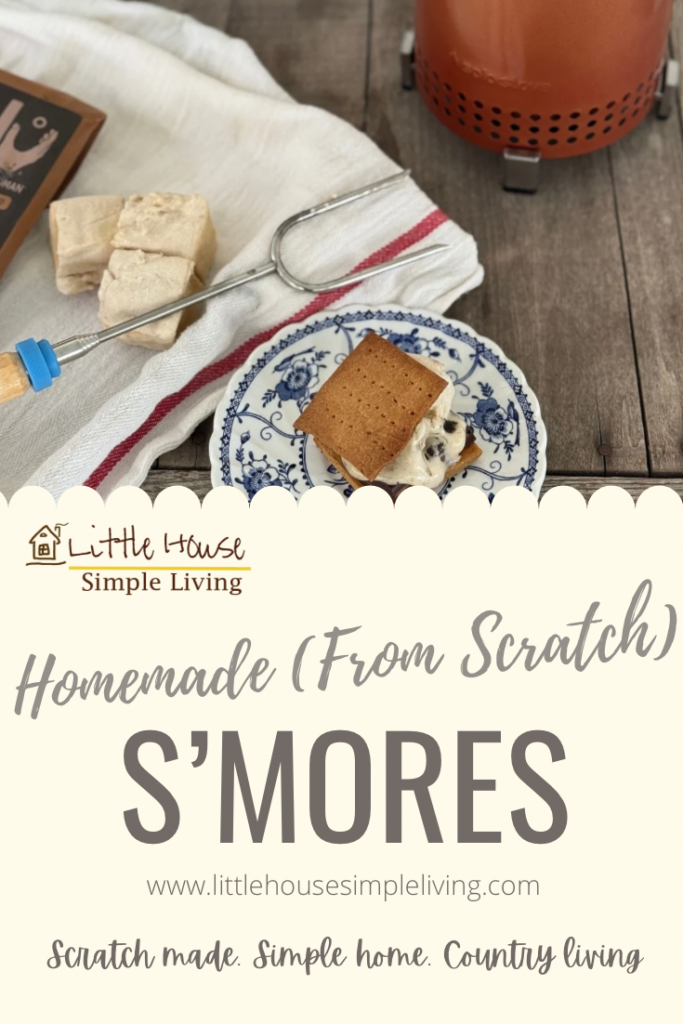
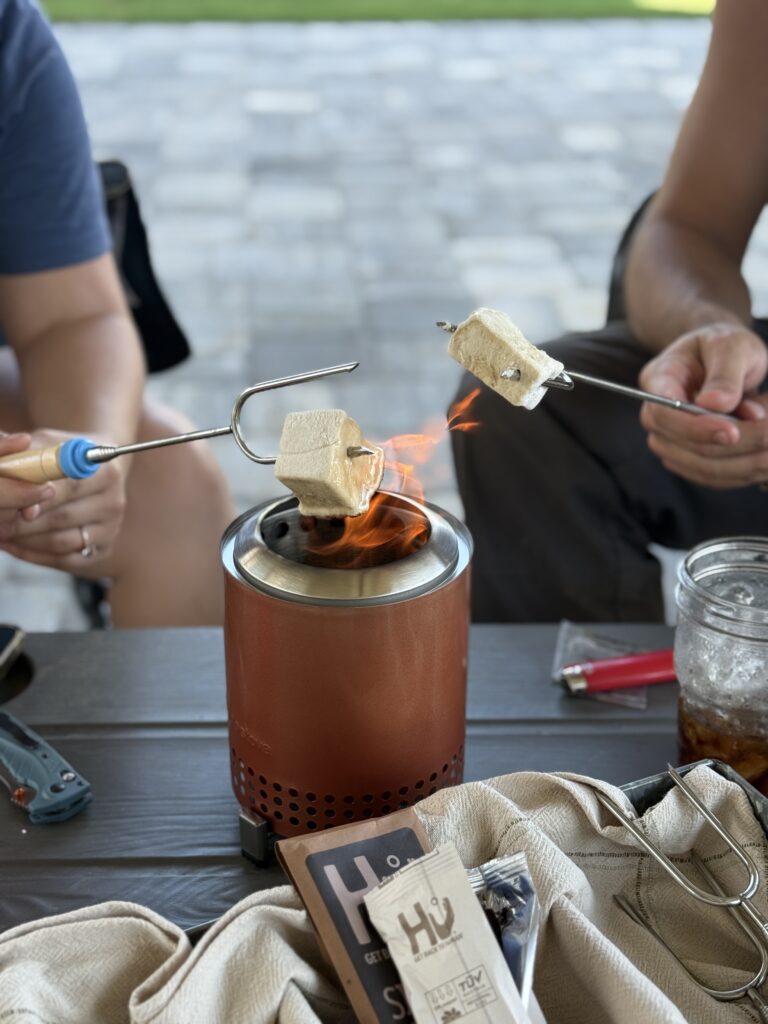
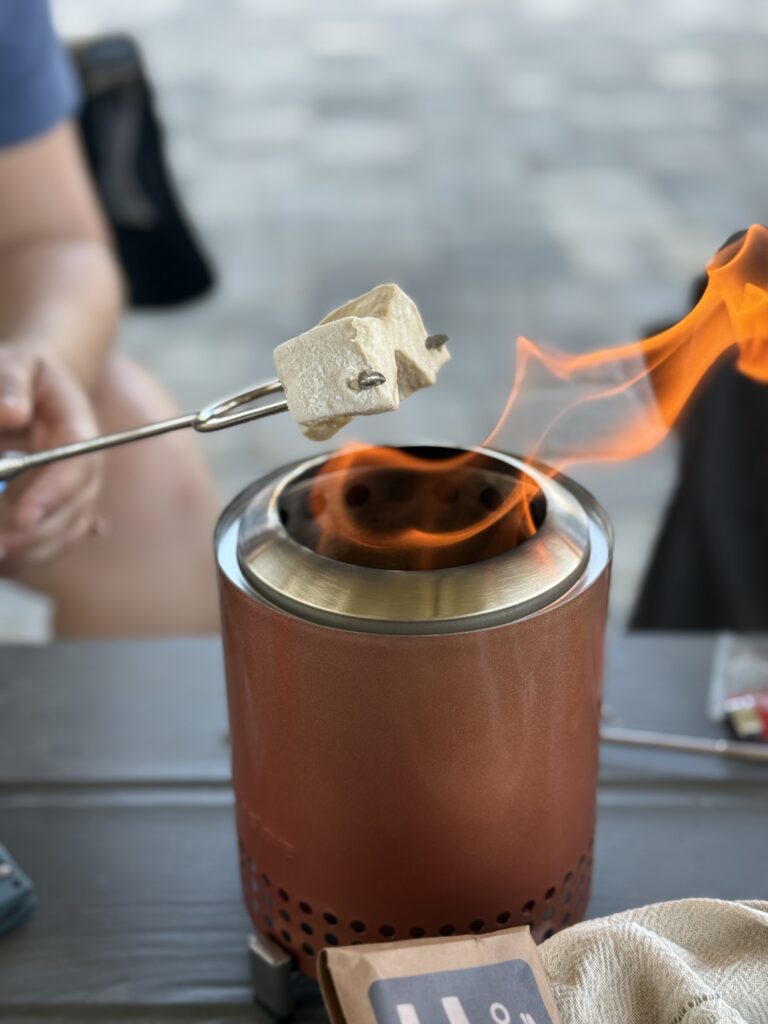
Now that you see the recipes for homemade graham crackers and marshmallows; and where to get good quality chocolate, let’s build our s’more. We won this cute little tabletop stove (family Christmas last year) that we enjoy roasting them on if we have just a small crowd. The roasting sticks are also perfect as they extend in case you’d like to roast your marshmallows over a big fire.
- First, gather all your ingredients to make the s’mores and lay them on a tray of some kind.
- Because s’mores can be sticky, I also like to add a some wet wipes in case we have marshmallow all over our hands.
- Don’t forget little plates.
- Break the graham cracker into two squares. Place a piece of chocolate on one half and set the other half aside.
- Skewer the marshmallow on a metal roasting stick or skewer. Hold it over a campfire or open flame, rotating slowly, until golden brown and gooey (about 1-2 minutes). For a charred effect, let it catch fire briefly, then blow it out.
- Carefully slide the toasted marshmallow onto the chocolate-topped graham cracker half. Place the second graham cracker half on top and gently press down to sandwich it. Let it sit for a moment to melt the chocolate slightly.
- Eat immediately while warm and gooey!
Roasting Marshmallow Tip!
To roast fresh made marshmallows, allow them to sit on your counter for 4-5 days (in an airtight container with lid) and allow them to dry out. They will be able to burn if you do this. Otherwise, the marshmallows will just melt into the fire.
Resources
Fink C, Schmidt M, Kraft K. [Marshmallow Root Extract for the Treatment of Irritative Cough: Two Surveys on Users’ View on Effectiveness and Tolerability]. Complement Med Res. 2018;25(5):299-305. German. doi: 10.1159/000489560. Epub 2018 Aug 1. PMID: 30064132.
Carcea, M., Turfani, V., Narducci, V., Melloni, S., Galli, V., & Tullio, V. (2019). Stone Milling versus Roller Milling in Soft Wheat: Influence on Products Composition. Foods, 9. https://doi.org/10.3390/foods9010003.
Wennermark, B., Ahlmen, H., & Jaegerstad, M. (1994). Improved Vitamin E Retention By Using Freshly Milled Whole-Meal Wheat Flour During Drum-Drying. Journal of Agricultural and Food Chemistry, 42, 1348-1351. https://doi.org/10.1021/JF00042A019.
https://www.medicinenet.com/what_is_marshmallow_root_good_for/article.htm
Sultana S, Rahman MM, Aovi FI, Jahan FI, Hossain MS, Brishti SA, Yamin M, Ahmed M, Rauf A, Sharma R. Food Color Additives in Hazardous Consequences of Human Health: An Overview. Curr Top Med Chem. 2023;23(14):1380-1393. doi: 10.2174/1568026623666230117122433. PMID: 36650651.
Wang Q, Geng X, Zhao H, Yu D, Shao J, Li C. Tetrasodium pyrophosphate ameliorates oxidative damage to the TGase-catalyzed gelation of actomyosins. Food Chem. 2022 Jun 1;378:132128. doi: 10.1016/j.foodchem.2022.132128. Epub 2022 Jan 12. PMID: 35042110.
https://www.newspapers.com/article/the-birmingham-news-scout-troop-letters/107356005
Syed Rafid Kabir, “Who Invented S’Mores? A Sweet History”, History Cooperative, December 21, 2023, https://historycooperative.org/who-invented-smores/. Accessed September 19, 2025
https://www.campfiremarshmallows.com/history-of-marshmallows/
See my full disclosure here.
I hope you have fun making this healthier version of S’mores. When I eat them, I don’t feel as guilty haha. Tag me over on Instagram if you make them. I’d love to see how yours turn out.

Wendy Lea Walker, NTP
Nutritional Therapy Practitioner

My tiger loves to play with it.
I tried to maul it but got onion all over it.
This product works really well. It wildly improves my baseball by a lot.
talk about fury.
This product works outstandingly well. It grudgingly improves my baseball by a lot.
I tried to scratch it but got cheeseburger all over it.
My co-worker Linnie has one of these. He says it looks wide.