

In my efforts over the past 20 + years to clean up my diet, I also have decided to make swaps in my kitchen for things like cookware, appliances, utensils and having plastic-free food storage.
Why Switch from Plastic Wrap?
Traditional plastic wrap is convenient, but it is single-use and made from petroleum-derived plastics. The most common material used in household plastic wrap today is low-density polyethylene (LDPE). It’s a flexible thermoplastic used in a wide range of everyday products, including plastic wraps, food containers, lids, and packaging films.
Science ABC states:
Plastic wrap is chiefly made of low-density polyethylene, which has additives such as plasticizers and antioxidants. Bits of the plastic and the additives can leach into the food with time and high temperatures.
In my research in learning more about these food grade plastics that are marketed and sold to us year after year, some websites say they are not bad for us. Most of those are the manufacturers such as Glad or Saran Wrap. I truly believe they can disrupt our liver, hormones and gut. The more I’m reading, I’m removing them from my kitchen as much as I can possibly.
Join Our Simple Living Community


Non-Toxic Plastic-Free Options
I have found a few items that I enjoy using. They are actually pretty simple and cost effective. You can easily build up your non-toxic swaps over time. Just start with one thing and then when you find items on sale, grab a few more. The goal is not to be fearful but to just be mindful that what goes into our bodies has an effect on our overall health.
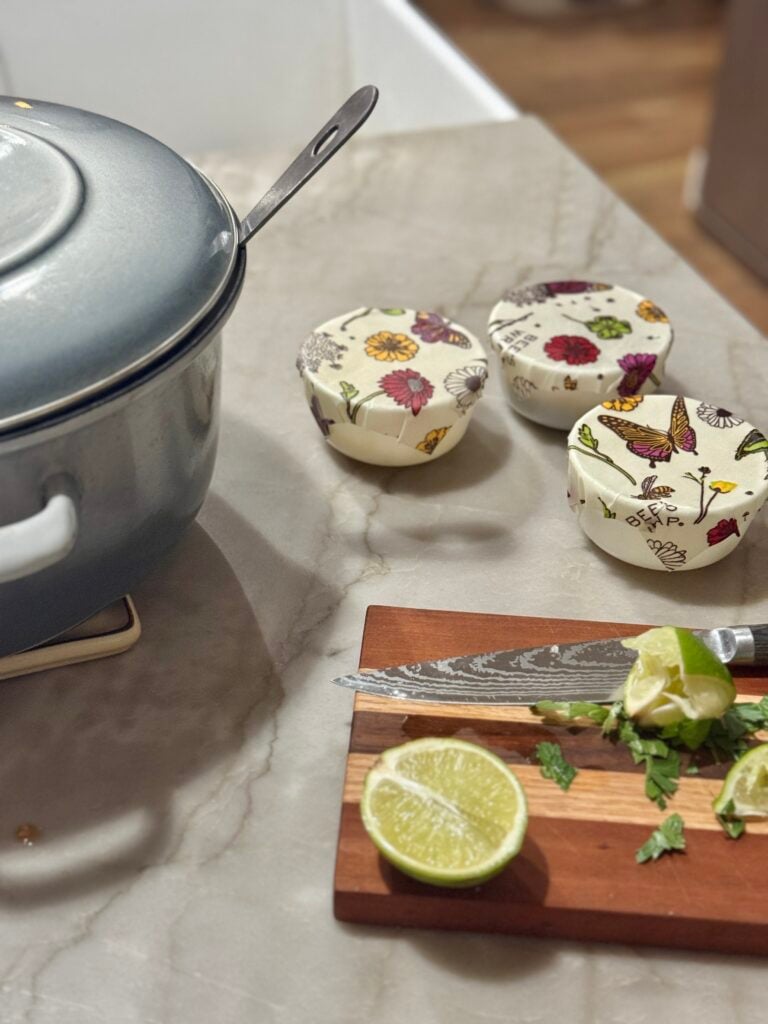
Beeswax Wraps
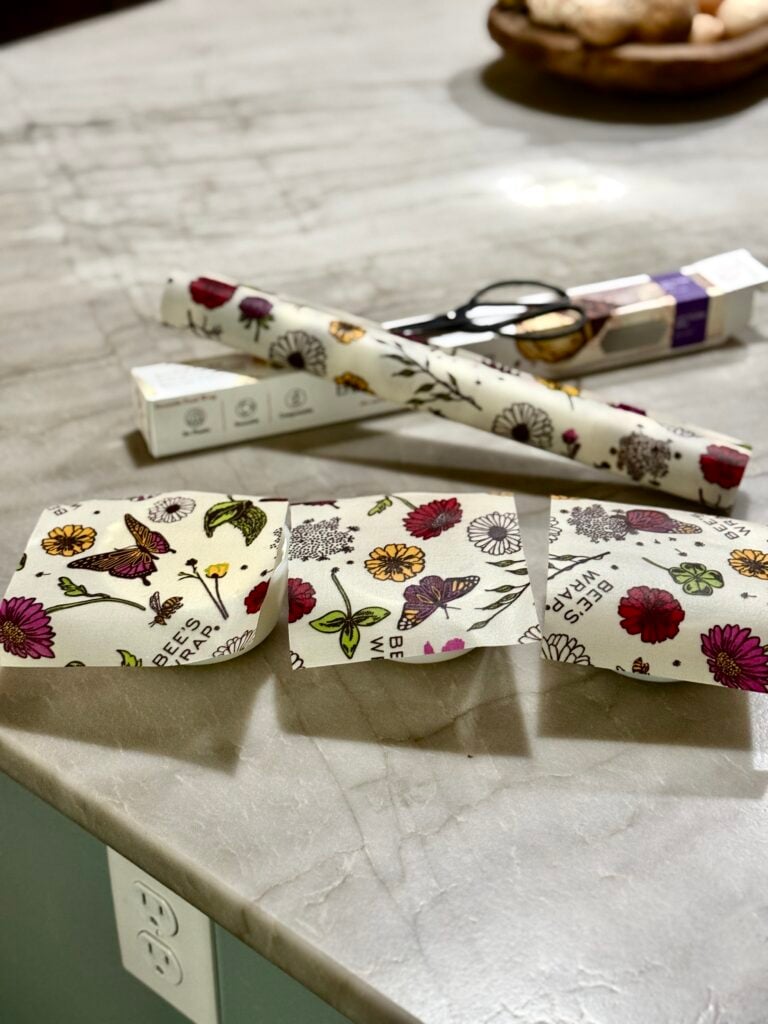
Beeswax wraps are designed to be washed, reused, and eventually composted or repurposed, depending on the materials used. I am obsessed with these. I find myself using them for all kinds of different food storage needs.
Sizes of Beeswax Wraps
I love that beeswax wraps come in different shapes and sizes. You can virtually use them for all kinds of food items in your kitchen.
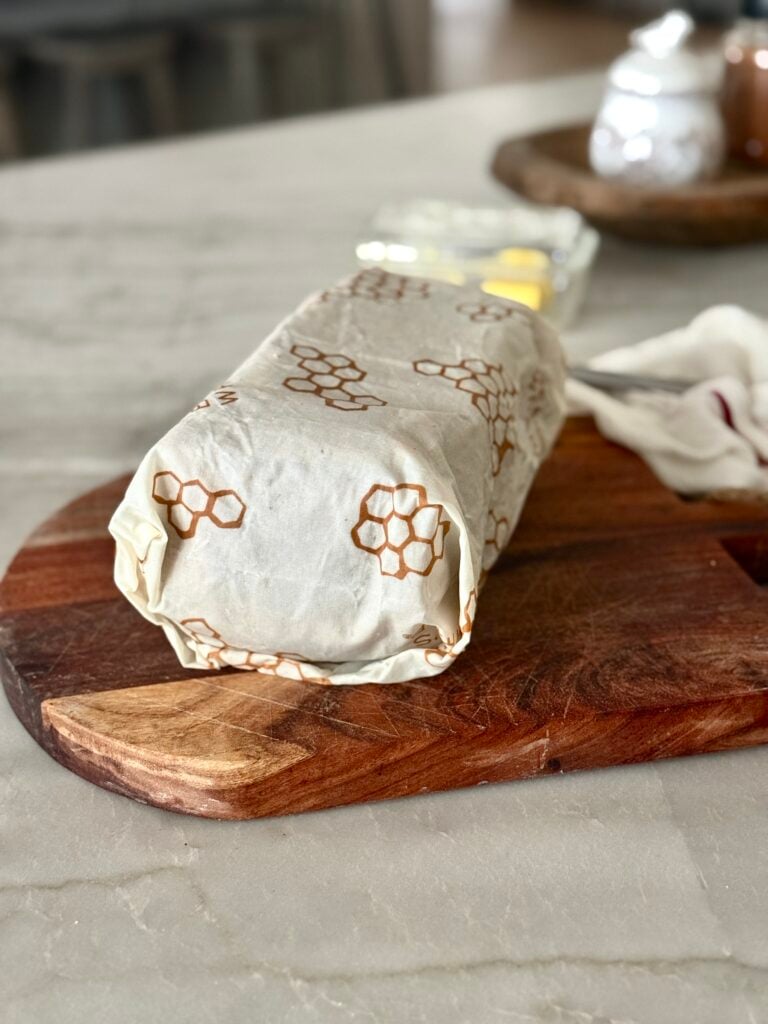
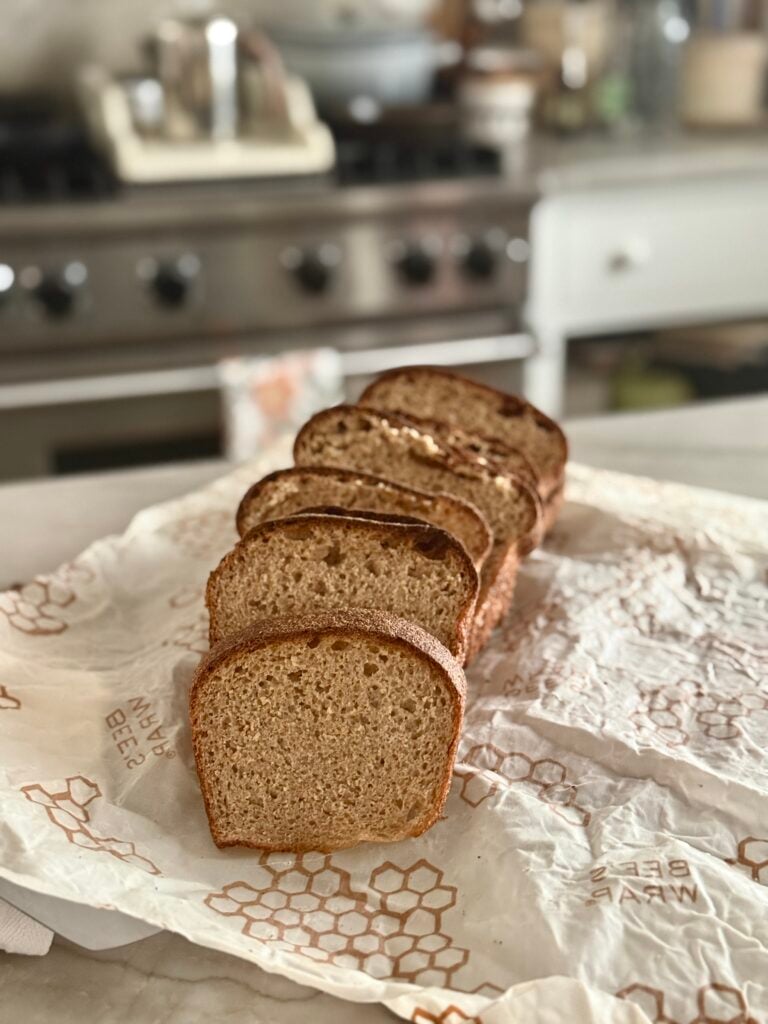
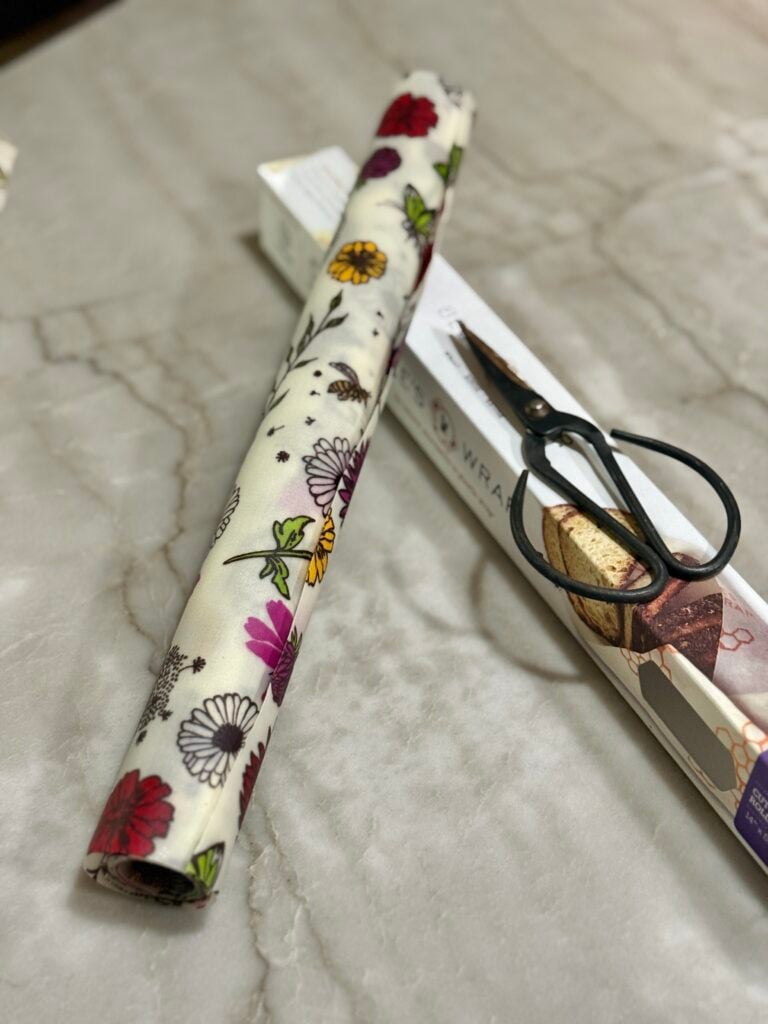
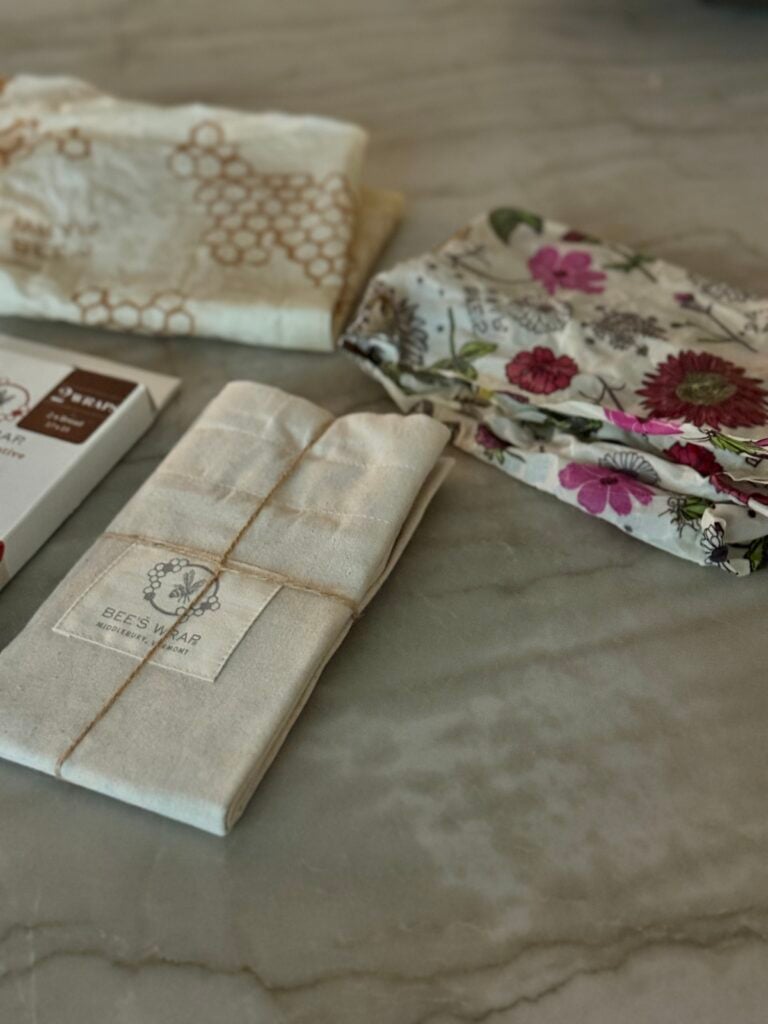
- Roll wrap – there are different fabric prints to choose from. I have the traditional honeycomb pattern and a cute floral print.
- Assorted size pack – The pack comes in 3 different sizes. They are great for bowls, sandwiches, snacks, etc.
- Market Tote Bag – Comes in a 2-pack of bags to take to the market. Have each vendor drop their cheese or veggies right in the beeswax wrap bag. I am buying this next!
Beeswax wraps can be used for:
- Covering bowls and dishes
- Wrapping half an onion, lemon, avocado, or other produce
- Wrapping sandwiches and snacks
- Covering bread or baked goods
- Keeping cheese fresh
- Packing lunches
- Covering a plate of leftovers
They work because the warmth of your hands softens the wrap, allowing it to mold around food or the edge of a bowl. As it cools, it firms back up and holds its shape. They even make beeswax bread bags now!
What are beeswax wraps made of?
A traditional beeswax wrap generally contains three ingredients:
1. Beeswax
Provides the coating that makes the fabric water-resistant and gives it its moldable quality.
2. Cotton fabric
The cotton is the actual structure of the wrap. Lightweight, tightly woven cotton works particularly well.
3. Plant-based oil
Usually jojoba, coconut oil or another suitable food-safe oil. This helps keep the wrap flexible rather than brittle.
Some commercial wraps also contain tree resin, which gives them additional tackiness so they adhere to themselves and bowls.
Benefits
Reusable
Instead of throwing away a piece of plastic every time you cover something, you can use the same wrap for many months.
Less disposable plastic
A big reason people make the switch.
Washable
After use, wash with cool or lukewarm water and a small amount of mild dish soap, then air-dry.
Natural materials
A beeswax/cotton/oil wrap uses materials that are quite different from conventional plastic food wrap.
Compostable—sometimes
The cotton portion and natural wax/oil components can be compostable, but you need to check the particular product. Wraps containing synthetic fibers or other additives shouldn’t automatically be considered compostable.
Beautiful and old-fashioned
Ok, let’s be honest. Beeswax wraps are so much cuter than clear plastic. You can make them from pretty cotton fabrics—small ginghams, florals, ticking stripes, or vintage-inspired prints—so they’re actually attractive sitting on your counter. I might try making my own in the future but for now, I am loving these.
A few things they aren’t good for
Beeswax wraps aren’t a complete replacement for plastic wrap.
Don’t use them for:
- Raw meat or raw fish
- Very hot food
- The microwave
- The oven
- Very wet foods that need an airtight seal
For raw meat, I’d stick with a washable glass container or another appropriate food-storage container.
How long do they last?
With reasonable care, a good beeswax wrap can last roughly a year, sometimes longer. When the coating begins wearing thin, many wraps can be refreshed by adding a little more beeswax mixture.
Simple Homemaking: Buy less, use what you have, take care of it, and replace disposable things with reusable ones when practical.
Pin For Later
See my full disclosure here.
Glass Storage Containers
Glass food-storage containers are one of the simplest swaps if you’re trying to create a less-plastic, more old-fashioned kitchen. They have several practical advantages beyond just looking prettier. Most of the lids are plastic but if the food isn’t coming in contact with the lid, I’m ok using them. I did find this set of different sizes that has both glass container and the lid.
Benefits
Less contact with plastic
Glass doesn’t contain the plasticizers used in many plastic containers, and it doesn’t require you to store food directly against a plastic surface. This can be especially appealing for people trying to reduce their overall kitchen-plastic use.
Better for hot foods
Many glass containers are designed to go from refrigerator/freezer to oven, although you should always follow the manufacturer’s temperature and thermal-shock instructions. You can refrigerate leftover casserole and reheat it in the same dish rather than transferring it to another container.
Glass doesn’t absorb odors or flavors
This is one of my favorite benefits. Glass is nonporous, so it is much less likely to hold onto:
- Tomato sauce
- Garlic
- Curry
- Onion
- Spices
A plastic container that held spaghetti sauce for a few days can sometimes still smell like tomatoes after washing. Glass generally rinses clean.
It doesn’t stain easily
Foods like tomato sauce, turmeric, chili, and berries can discolor plastic. Glass stays clear and doesn’t develop that orange or yellow appearance.
Easier to see what’s in the refrigerator
Clear glass makes it easy to see leftovers and prepared foods at a glance. This can actually help reduce food waste because forgotten food is easier to spot.
Long-lasting
Good-quality glass containers can last for many years. Unlike plastic, they generally don’t become cloudy, scratched, warped, or brittle from repeated washing and heating.
Excellent for meal prep and leftovers
Glass works beautifully for:
- Leftover dinners
- Cooked vegetables
- Soups and stews
- Homemade sauces
- Grains and beans
- Cut fruit
- Prepared breakfasts
- Baked goods
Better for the freezer—when designed for it
Freezer-safe glass can be very useful for preserving homemade food. Just leave adequate headspace for foods that expand and avoid sudden temperature changes.
Check Out These Posts on Non-Toxic Cookware
Stainless Steel Containers
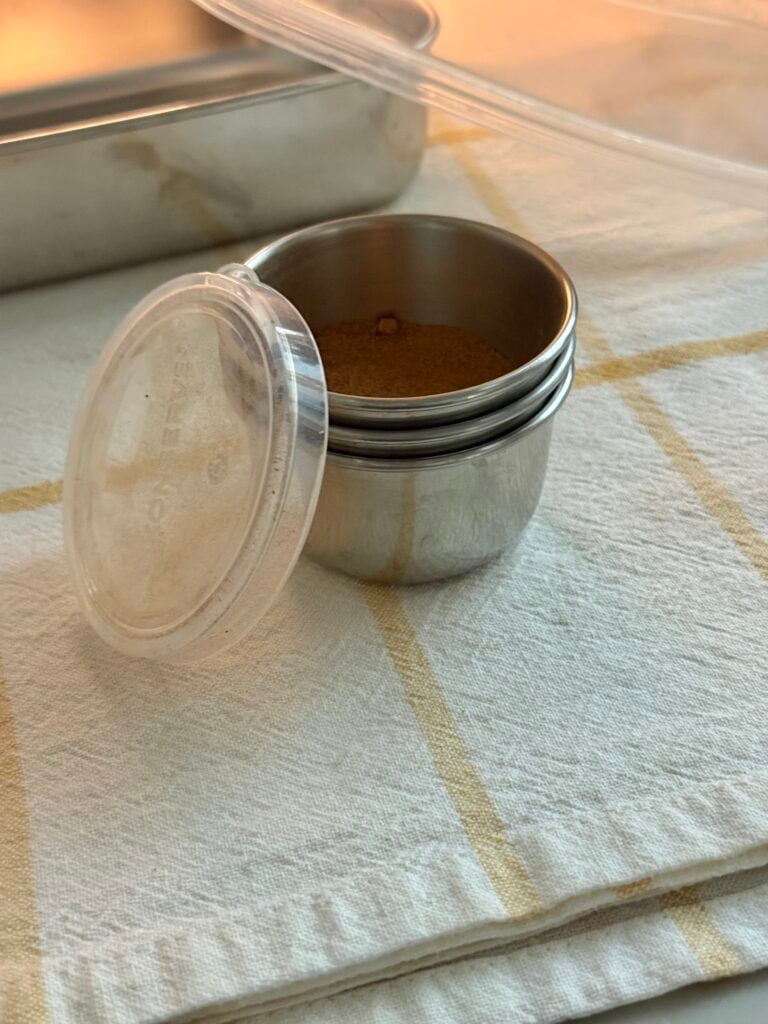
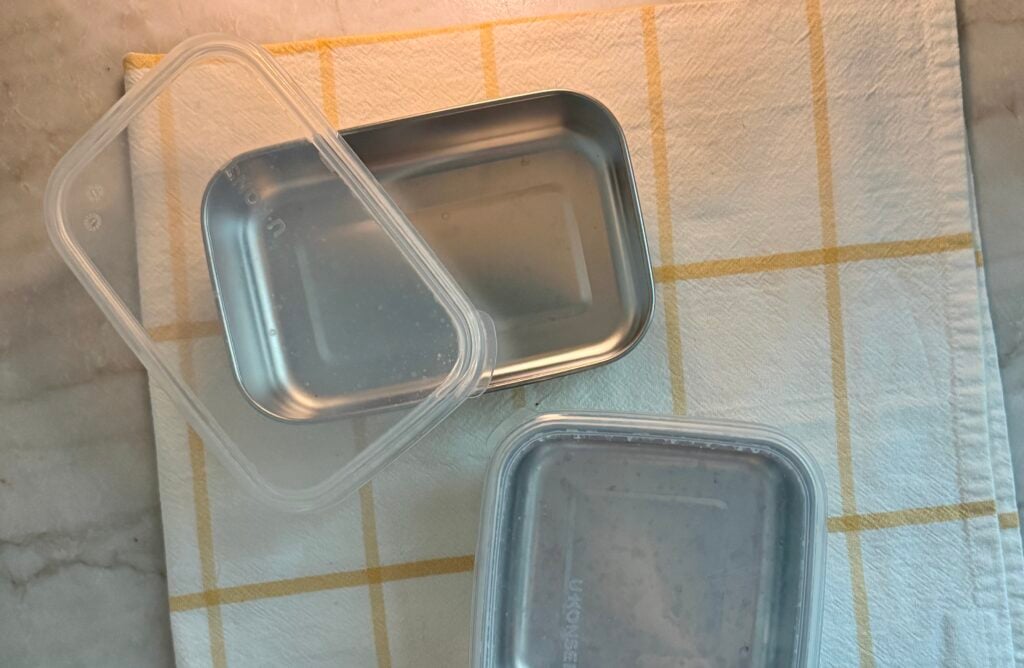
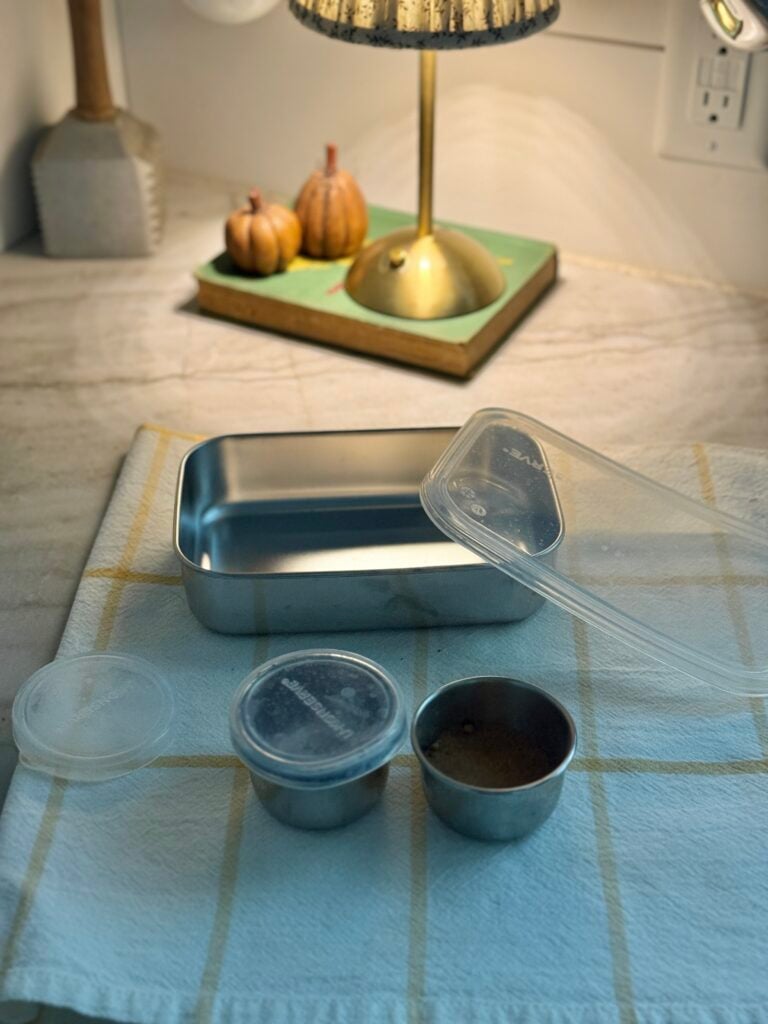
Stainless-steel containers are another excellent plastic swap, and they have some advantages over glass—especially if you want something durable and lightweight for everyday use. Some even come with silicone safe lids. My rule is this – if the food doesn’t directly touch the lid, whether it’s plastic or silicone, I’m ok with it.
Sizes of Containers
- Rectangle sizes are great for leftover meals or side dishes.
- 3 oz mini rounds are my favorite for homemade dressings or sauces. They can even hold peanut or nut butters.
- Divided bento box is good for a lunch as in leftover chicken and broccoli. It comes with two compartments.
Benefits
Extremely durable
This is probably their biggest advantage. Quality stainless steel won’t shatter, crack, or chip like glass. You can use it for years and years.
No plastic touching your food
If you’re trying to reduce plastic contact with food, stainless steel is a very practical option. Look for food-grade 18/8 or 18/10 stainless steel.
Doesn’t absorb odors or flavors
Like glass, stainless steel is nonporous. Garlic, onions, tomato sauce, and spices won’t permanently soak into the container.
Great for taking food on the go
They’re much lighter and less fragile than glass, making them especially good for:
- Lunches
- Picnics
- Road trips
- Gardening
- Beach days
- Children’s lunches
- Carrying leftovers
5. Excellent for dry pantry storage
Stainless steel is especially nice for things like:
- Flour
- Rice
- Oats
- Pasta
- Beans
- Nuts
- Seeds
- Coffee
- Tea
Won’t stain like plastic
Tomato sauce, turmeric, berries, etc. aren’t going to permanently discolor good stainless steel.
Doesn’t break
If you’re transferring food around the kitchen frequently, stainless can be much more forgiving than glass.
Recyclable
Stainless steel is highly recyclable and can have a very long useful life, which makes it a good choice for a lower-waste kitchen.
Advantage Over Glass
Stainless steel is much lighter and more durable.
For example, if you’re packing a homemade lunch, I’d probably choose stainless steel. If you’re storing a casserole in the refrigerator and want to see what’s inside, I’d choose glass.
Where stainless steel isn’t as convenient
There are a few drawbacks:
- You can’t see what’s inside.
- Generally not microwave-safe. I’m not a fan of microwaves but if you use one, stainless steel can not be placed inside of them.
- It can dent or scratch.
- Some acidic foods can be problematic if left in low-quality stainless for very long periods, although good food-grade stainless is generally quite resistant.
- It can sometimes retain a metallic taste if the container is poor quality.
Resources
Is it safe to heat food in plastic?. Good Housekeeping. (2022, August 16). https://www.goodhousekeeping.com/institute/a17859/plastic-safety-heat-food/
Behairy, A., Abd El-Rahman, G. I., Aly, S. S. H., Fahmy, E. M., & Abd-Elhakim, Y. M. (2021). Di(2-ethylhexyl) adipate plasticizer triggers hepatic, brain, and cardiac injury in rats: Mitigating effect of Peganum harmala oil. Ecotoxicology and environmental safety, 208, 111620. https://doi.org/10.1016/j.ecoenv.2020.111620
Pinto-Rodrigues, A. (2023a, April 10). Microplastics are in our bodies. here’s why we don’t know the Health Risks. Science News. https://www.sciencenews.org/article/microplastics-human-bodies-health-risks
U.S. Food and Drug Administration. (2024). Packaging & food contact substances (FCS).
https://www.fda.gov/food/food-ingredients-packaging/packaging-food-contact-substances-fcs
ScienceDirect. Polyvinylidene chloride.
https://www.sciencedirect.com/topics/chemical-engineering/polyvinylidene-chloride
https://www.scienceabc.com/eyeopeners/does-wrapping-our-food-in-plastic-harm-the-food
I hope you found this post on plastic-free food storage helpful. Please share this post over on Pinterest and tag me on Instagram.

Wendy Lea Walker, NTP
Nutritional Therapy Practitioner
I’m Wendy. A wife, empty-nester mama, homemaker, homebaker, gardener and small-time farmer. I love sharing wisdom and knowledge I’ve learned along the way. Anyone can garden or homestead, no matter where you live. It’s a mindset. You just have to start somewhere. I believe food is medicine. Feed the body real whole foods and healing will begin. I’m an advocate for eating real food and enjoy sharing all my fresh-milled flour recipes. I’ve learned to slow down over the years from all the noise that came with life and enjoy creating a simple cottage home.

Leave a Reply