

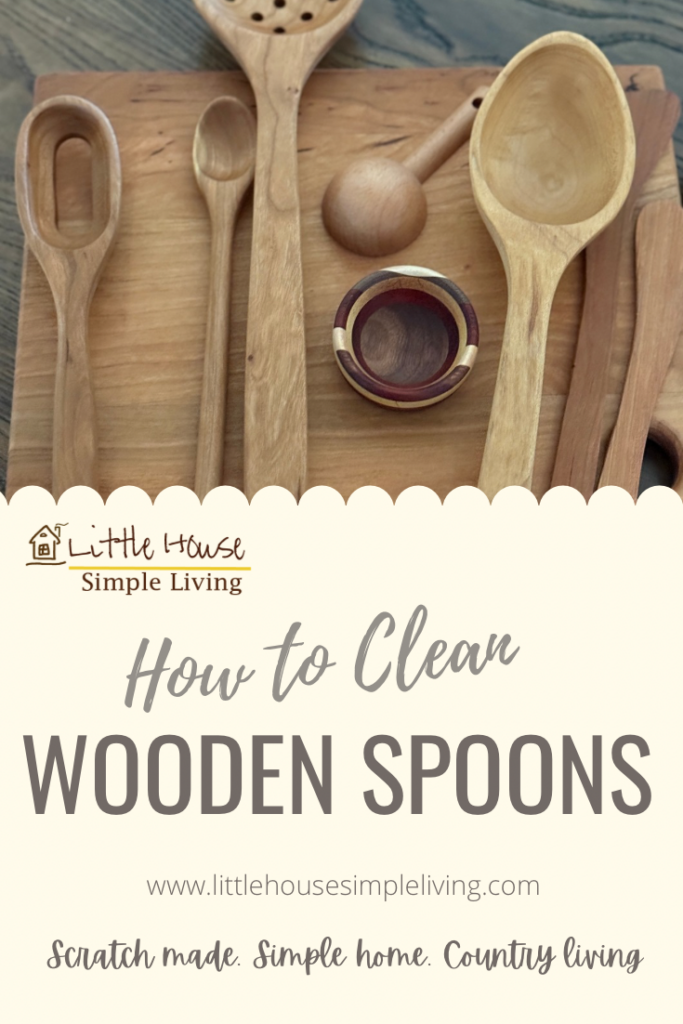
Cleaning wooden spoons properly helps them last longer and stay safe for food use. Here’s my step-by step process on How to Clean Wooden Spoons.
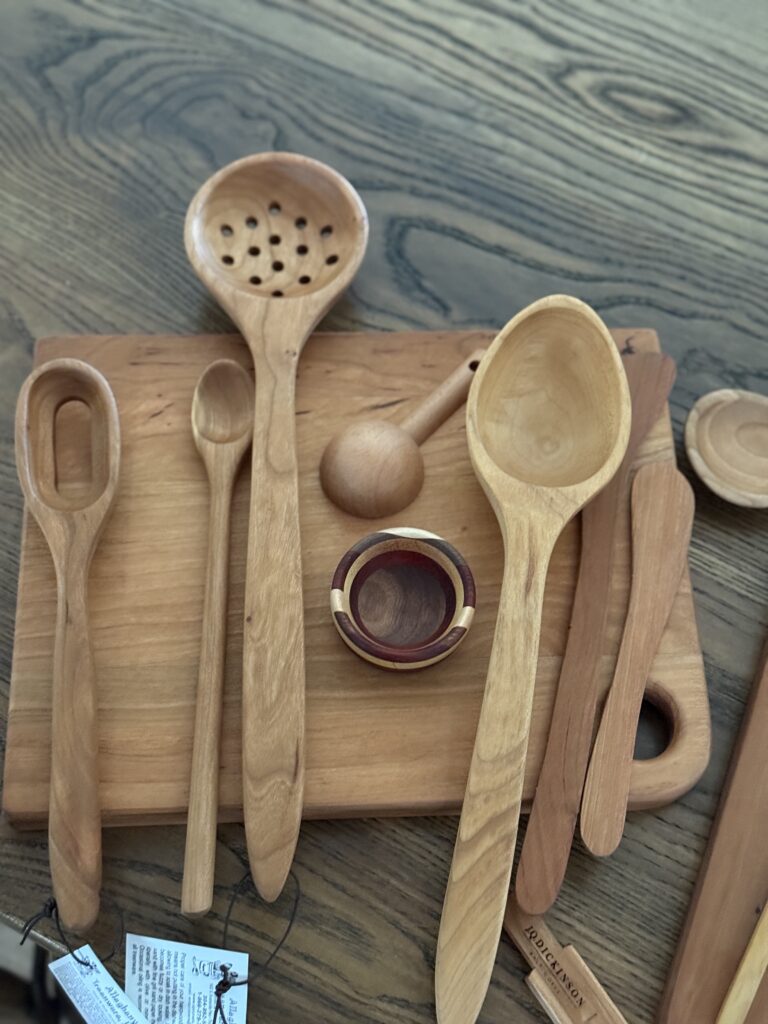
Why Buy Handmade Wooden Spoons
Handmade wooden spoons offer several advantages that make them worth considering:
1. Unique Craftsmanship: Each spoon is individually crafted, often with unique designs, shapes, or wood grains, making them one-of-a-kind kitchen tools or decorative pieces.
2. High-Quality Materials: Artisans typically select durable, food-safe hardwoods like maple, cherry, or walnut, which are stronger and longer-lasting than mass-produced alternatives.
3. Ergonomic Design: Handmade spoons are often designed with comfort and functionality in mind, offering better grip and balance tailored to specific tasks like stirring or serving.
Join Our Simple Living Community


4. Eco-Friendly: Wooden spoons are sustainable, biodegradable, and often made from responsibly sourced wood, reducing environmental impact compared to plastic or metal utensils.
5. Gentle on Cookware: Wood doesn’t scratch nonstick pans or delicate surfaces, preserving your cookware’s lifespan.
6. Durability with Care: With proper maintenance (like oiling and hand-washing), handmade wooden spoons can last for years, often outlasting cheaper, factory-made versions out of plastic.
7. Supports Artisans: Purchasing handmade spoons supports small businesses, local craftsmen, or independent artisans, contributing to ethical and sustainable economies.
8. Aesthetic Appeal: Their natural beauty and unique grain patterns add warmth and character to your kitchen, doubling as display pieces or thoughtful gifts.
How To Clean Wooden Spoons
1. Daily Cleaning:
- Hand wash only: Use warm water and mild dish soap with a sponge or brush. Rinse wooden spoons under warm water right after use to remove food residue. Focus on stained or sticky areas. Avoid harsh detergents or abrasive scrubbers, which can damage the wood.
- Rinse thoroughly: Make sure no soap is left on the wood.
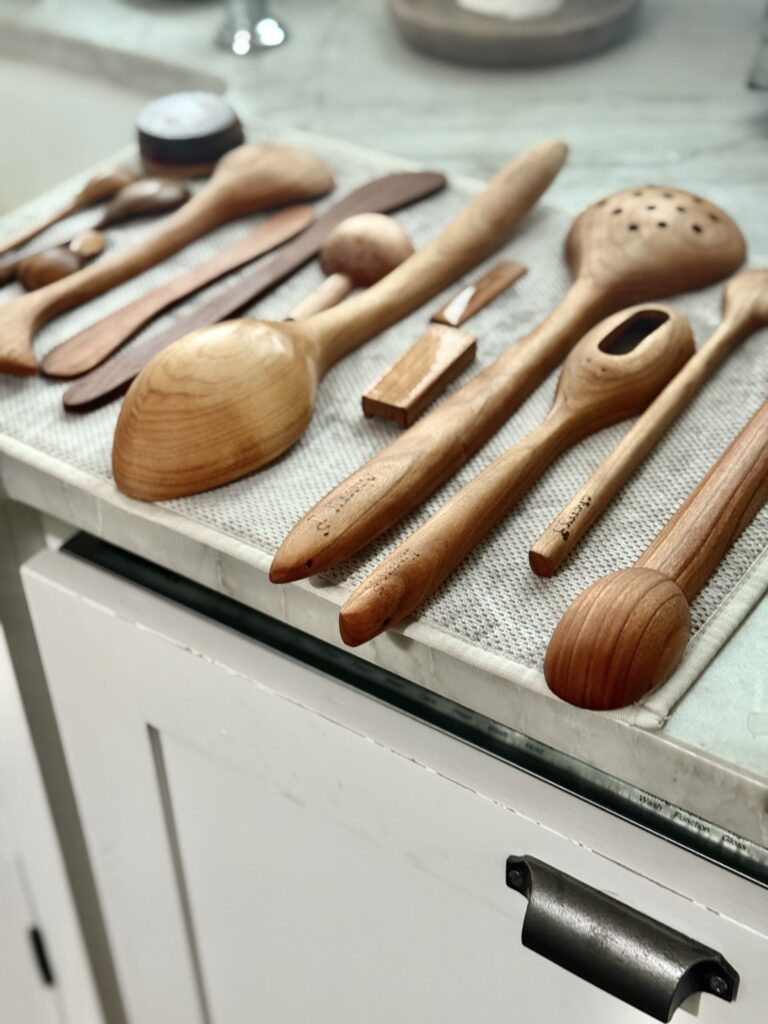
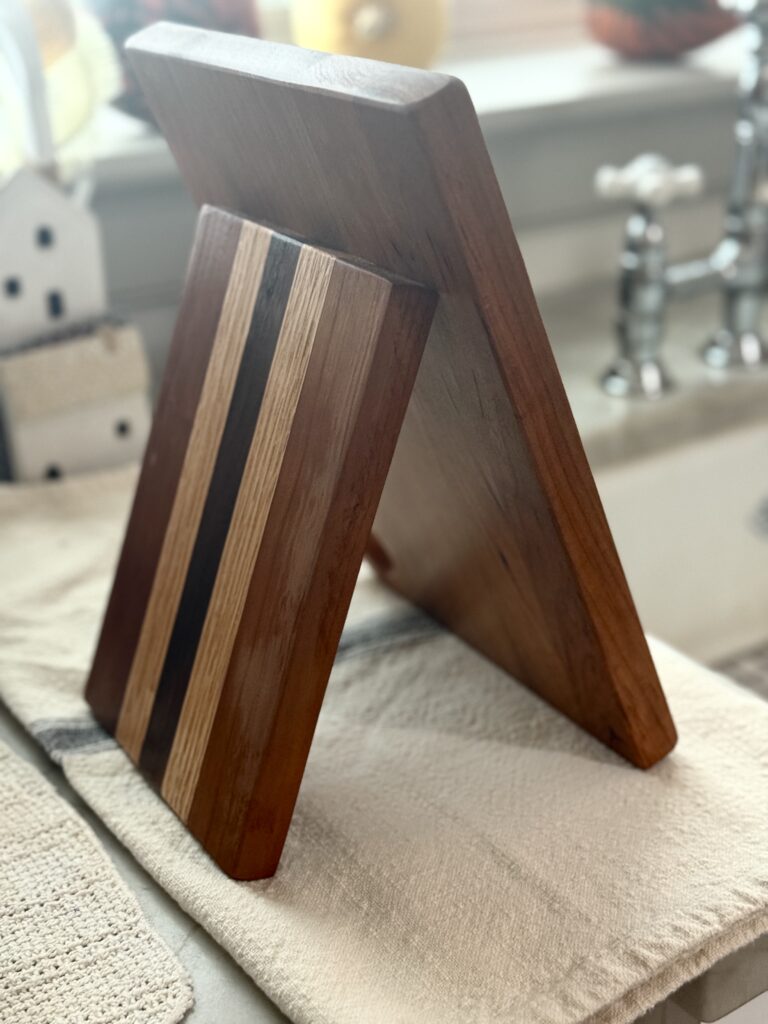
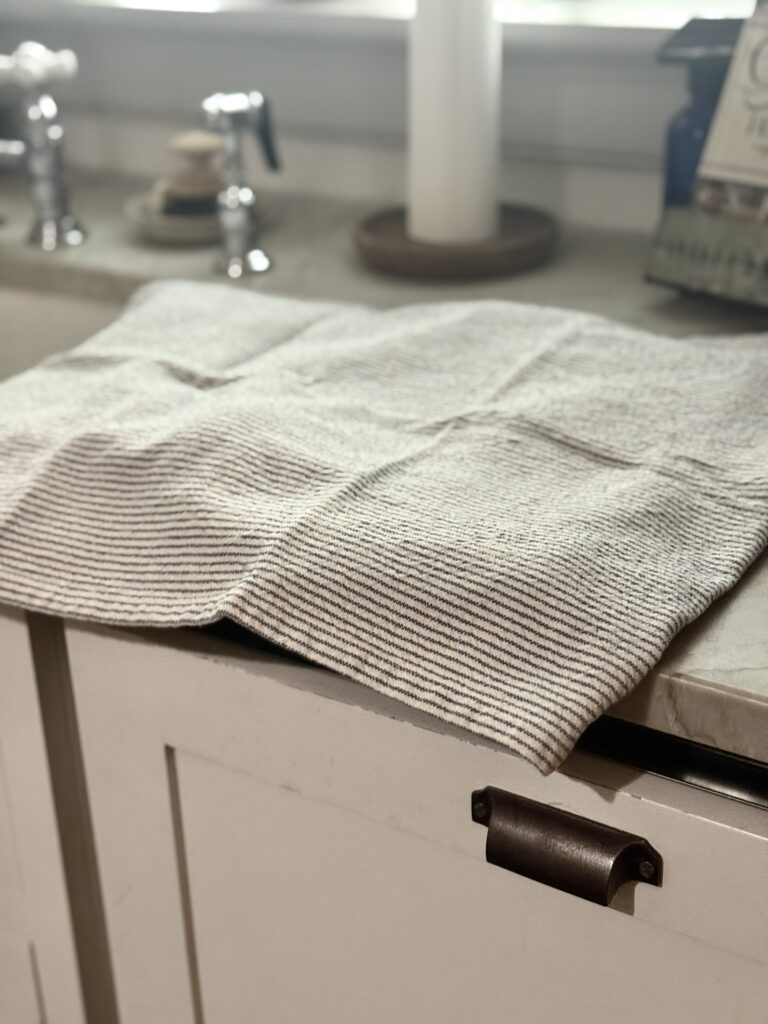
- Dry immediately: Pat with a towel and air dry completely. I also like setting them on a drying mat and cover them with a towel overnight. Never let them sit in water or put them in the dishwasher — this causes cracking or warping. Avoid stacking wet spoons or storing them in a damp environment to prevent mold.
2. Deep Cleaning (Occasionally) :
- Remove odors/stains: Rub with a paste of baking soda and water or scrub with half a lemon and coarse salt.
- Disinfect naturally: White vinegar diluted with water (1:1) can be used for a quick soak (10–15 minutes), then rinse and dry.
3. Conditioning (Monthly):
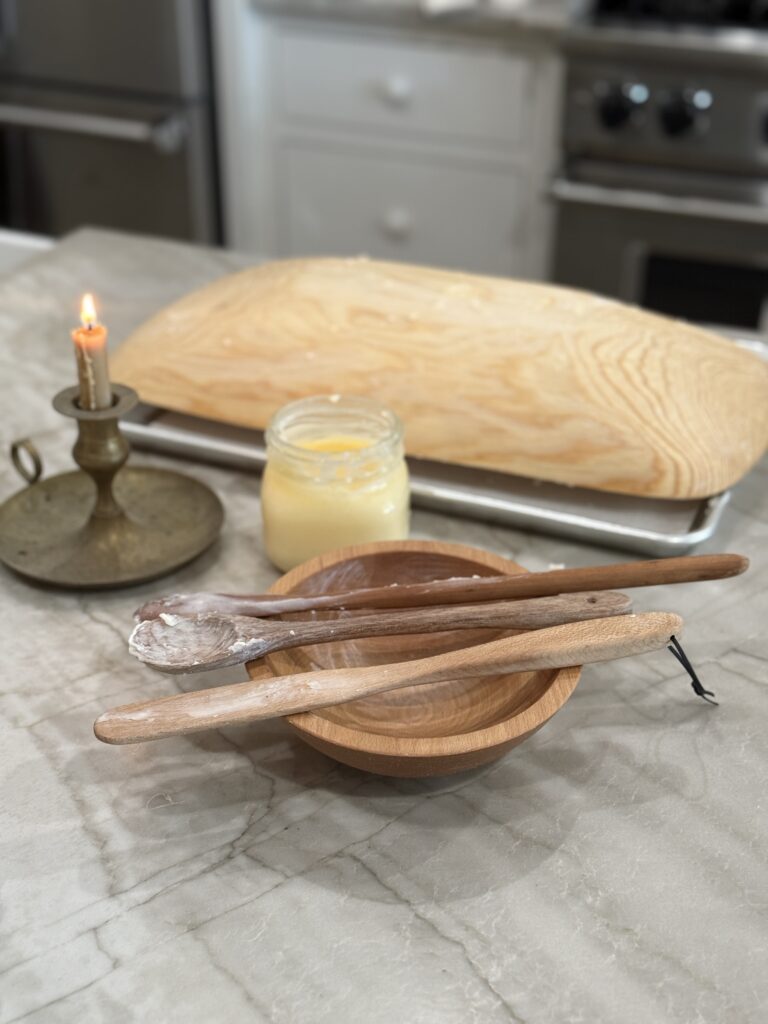
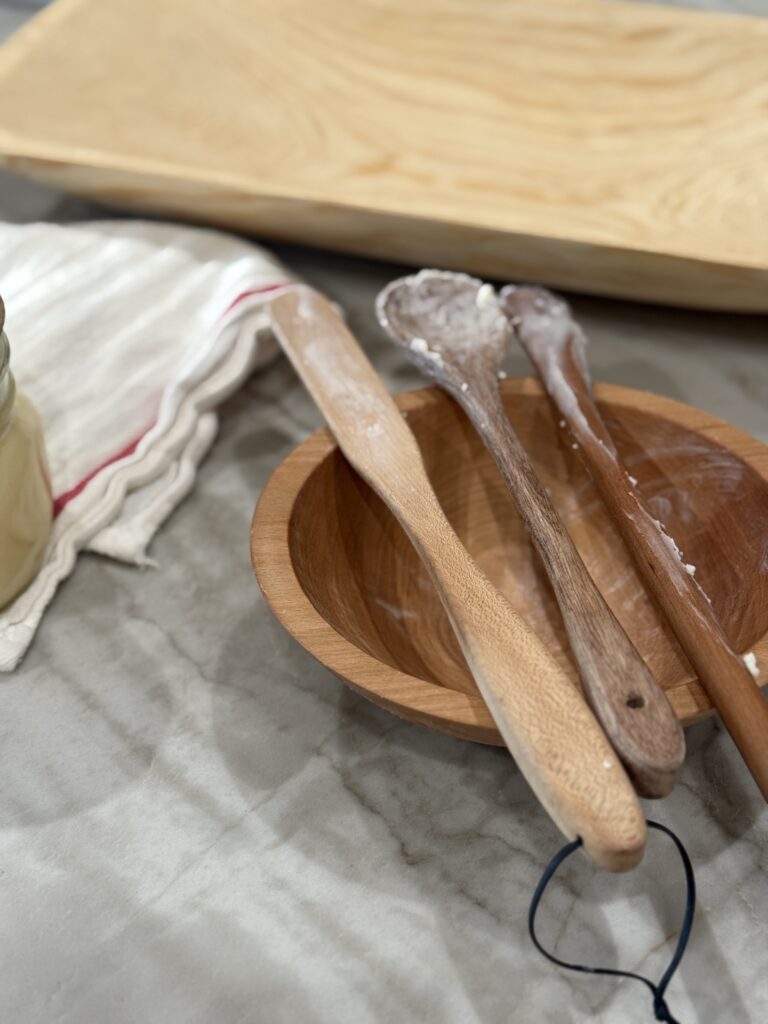
- Oil the wood: Rub with food-safe beeswax, and/or coconut oil to keep from drying out. Let it absorb for a few hours or overnight, then wipe off the excess.
Pin For Later
Where to Buy Wooden Spoons
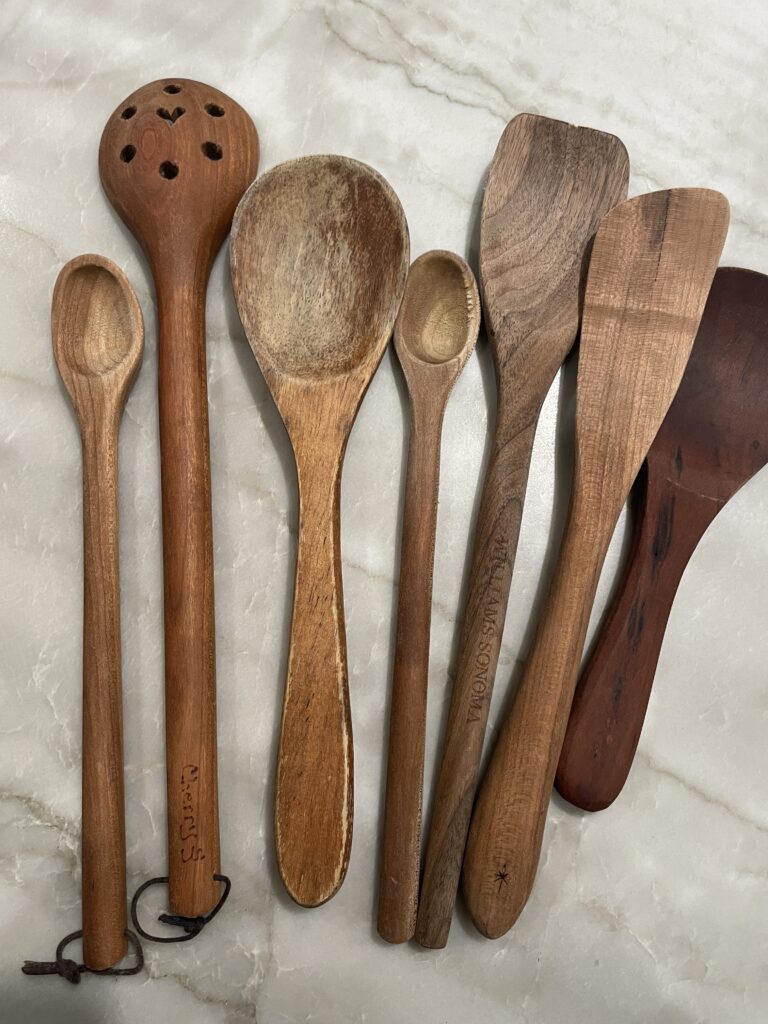
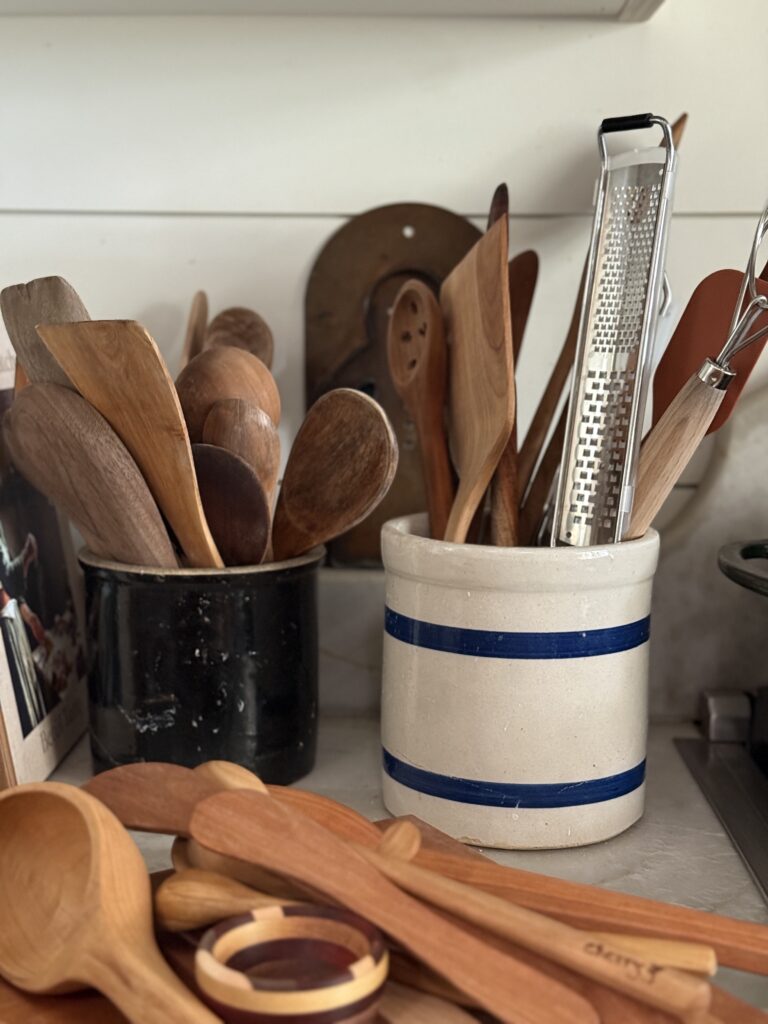
I love going to local markets or finding local artisans to buy my wooden spoons and utensils. I even find them if I’m out of town traveling. Supporting locals and handmade items is important to me. They have a craft and a gift to share with us. I absolutely love cooking and baking with wood tools. I have slowly ditched most of all the plastic ones. It takes time to build up your collection. Just buy a piece here and there and before you know it, you will be able to display and use handmade tools too.
If you have a hard time finding anywhere to buy wooden spoons and utensils in your town, here are some great options online.
Important Tips
Do Not Put in Dishwasher: The high heat and prolonged water exposure in dishwashers can split or warp wooden spoons.
Avoid Soaking: Limit water exposure to prevent damage.
Sanitize When Needed: For occasional deep cleaning, wipe with a diluted white vinegar solution (1:1 vinegar to water) and rinse immediately to avoid lingering smells.
Tools Used in This Step-By-Step Guide
When to Replace Your Wooden Spoons
If your wooden spoon has deep cracks, splinters, or persistent odors that don’t go away after cleaning, it’s time to replace it to avoid bacterial growth or splinters in food.
How To Make Wooden Spoon Conditioner
How to Make Wood Spoon Conditioner
Keep your wooden spoon collection beautiful by conditioning it with a homemade butter once a month.
How To Clean Wooden Spoons
Materials
- Handmade Spoons and Utensils
- Mild Soap
- Dish Cloth
- Drying Mat
- Dish Towel
Instructions
Daily Cleaning:
- Hand wash only: Use warm water and mild dish soap with a sponge or brush. Rinse wooden spoons under warm water right after use to remove food residue. Focus on stained or sticky areas. Avoid harsh detergents or abrasive scrubbers, which can damage the wood.
- Rinse thoroughly: Make sure no soap is left on the wood.
- Dry immediately: Pat with a towel and air dry completely. I also like setting them on a drying mat and cover them with a towel overnight. Never let them sit in water or put them in the dishwasher — this causes cracking or warping. Avoid stacking wet spoons or storing them in a damp environment to prevent mold.
Deep Cleaning (Occasionally):
- Remove odors/stains: Rub with a paste of baking soda and water or scrub with half a lemon and coarse salt.Disinfect naturally: White vinegar diluted with water (1:1) can be used for a quick soak (10 – 15 minutes), then rinse and dry.
Conditioning (Monthly):
- Oil the wood: Rub with food-safe beeswax, and/or coconut oil to keep from drying out. Let it absorb for a few hours or overnight, then wipe off the excess.
Notes
- Do Not Put in Dishwasher: The high heat and prolonged water exposure in dishwashers can split or warp wooden spoons.
- Avoid Soaking: Limit water exposure to prevent damage.
- Sanitize When Needed: For occasional deep cleaning, wipe with a diluted white vinegar solution (1:1 vinegar to water) and rinse immediately to avoid lingering smells.
These steps will keep your wooden spoons clean, safe, and long-lasting. As always, tag me over on Instagram. I’d love to see your collection of wooden spoons and utensils.


Leave a Reply