

As much as I love making beautiful sourdough artisan bread loaves, I also enjoy just making a good “ole sandwich loaf of bread. I’m so excited to share with ya’ll my Basic Whole Wheat Bread recipe.
{Jump to Recipe}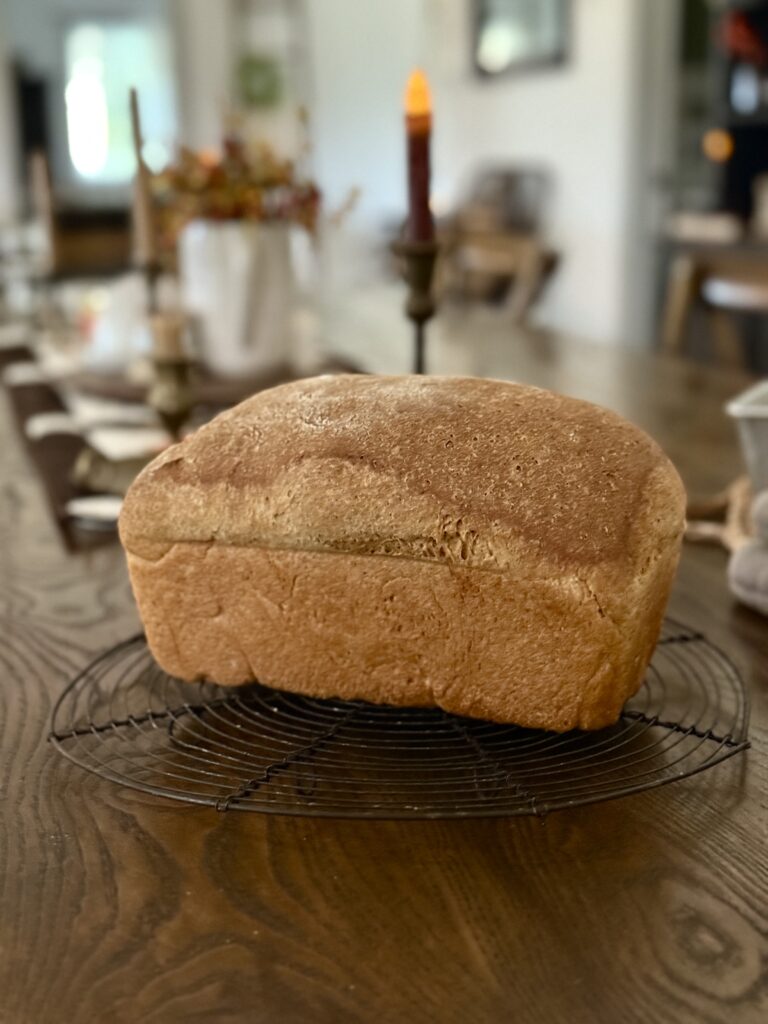
Beginner’s Guide:
Learn How to Grind Your Own Flour
Ingredients In Whole Wheat Bread
There’s a huge difference between homemade bread and what you buy in the store. For instance, grinding your own wheat into flour gives you so much more nutrition than what you find on grocery store shelves. It’s no wonder we all have these gluten intolerances.
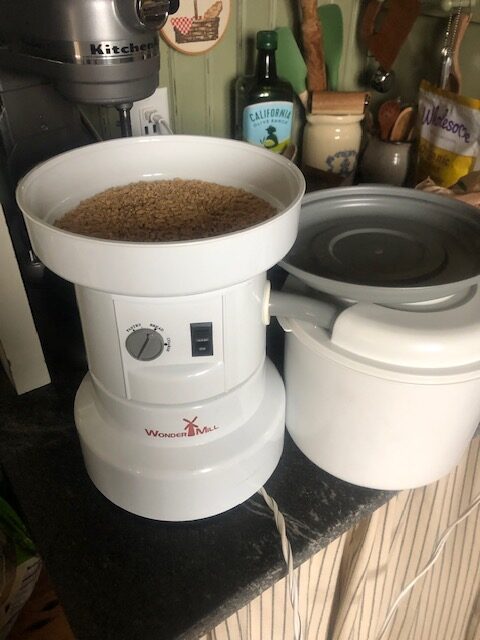
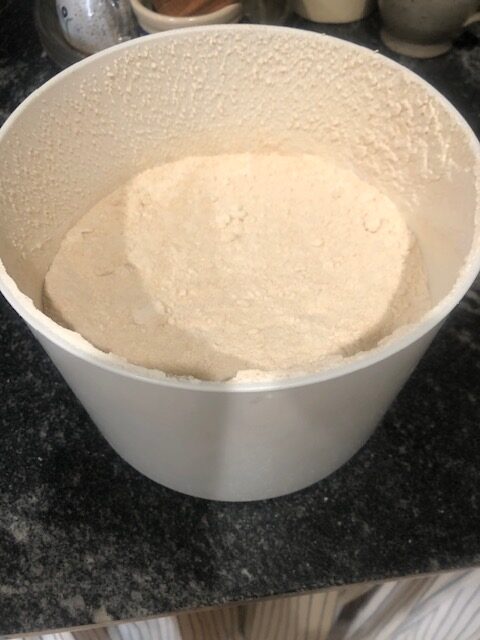
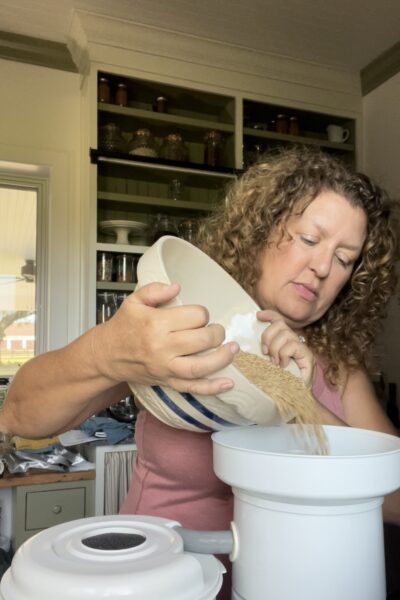
Hard White Wheat – I use hard white wheat-berries and grind them into flour. Fresh-milled flour is loaded with vital nutrients that our bodies require. This makes the most amazing loaf of bread. I’m a co-op leader for Bread Becker’s. If I run out before our next ordering cycle, I have some great companies I buy from. See where I buy my wheat-berries HERE and HERE.
Active Dry Yeast – This is required to get a good rise. It’s usually found in little packets or can be bought in bulk, as I do. It keeps for a long time. It’s essentially a dehydrated single-celled living organism. The yeast cells feed on sugars and starch in your flour and turn them into carbon dioxide and alcohol. The carbon dioxide is what makes our bread rise.
Sunflower Lecithin – Sunflower lecithin is a natural fatty substance derived from sunflower seeds, commonly used as an emulsifier in food products to help mix ingredients that would otherwise separate. It is rich in phospholipids, which are important for cell membrane structure and function, and is often considered a cleaner alternative to soy lecithin due to its non-GMO and allergen-free properties.
Real Pink Salt – Salt is another ingredient that makes a good loaf of bread. Trust me haha. If you forget to add it, your bread will still be nice and fluffy but it will taste bland. If you are not using a good quality pink salt, then I highly recommend you start. The little blue canister salt is not good for us. The salt I use is loaded with over 60+ trace minerals.
Olive Oil or Butter – You’ll need one or the other to make that fluffy loaf you are looking for. I use olive oil but butter is fine too.
Raw Honey – Try to opt for raw local unheated honey. That is better for our immune system. I don’t use white sugar but sucanut (whole cane sugar) is another option for a sweetener.
How To Make Basic Whole Wheat Bread
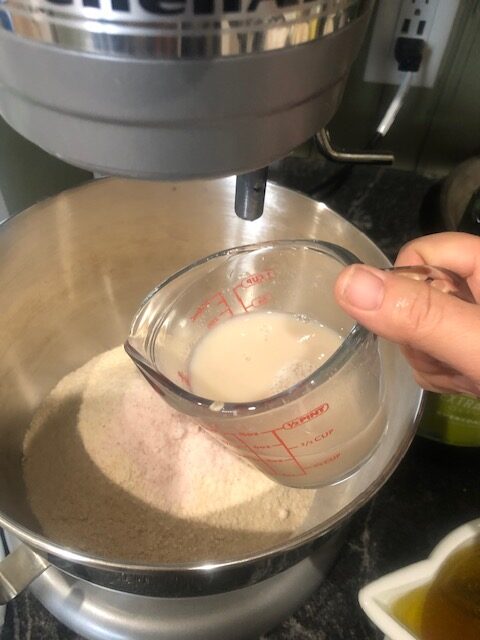
- Dissolve the yeast in warm water. Stir until nice and bubbly.
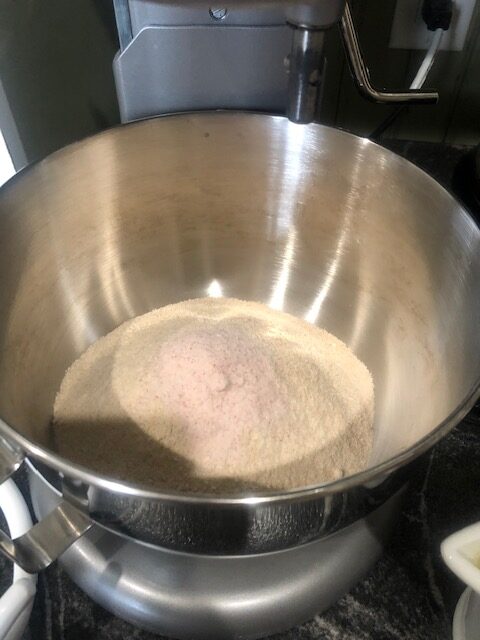
- Mix the flour, lecithin and salt in your bowl. Make a well in the center.
- Add the honey and olive oil to the lukewarm water. Stir together. Tip: If you add the olive oil first, the honey will not stick to the measuring spoon.
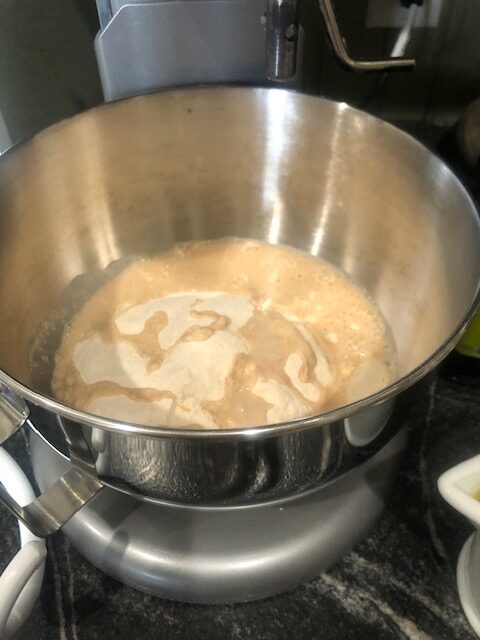
- Pour the yeast into the well of the flour and then add the honey/oil mixture. Using your Danish whisk, stir together until everything is combined.
- Now, it’s time to knead the dough. If doing it by hand, it’s about 600 strokes. In a standup mixer, it will take about 10 minutes. Cover with a damp towel and let rise for 1-2 hours. It should double in size.
- With a wet finger, poke a hole into the dough. If the hole doesn’t fill in, you are ready for the next step.
- Gently punch down the dough and pull it from the sides, forming a ball. Cover with the same towel and let rise again, usually 30 minutes.
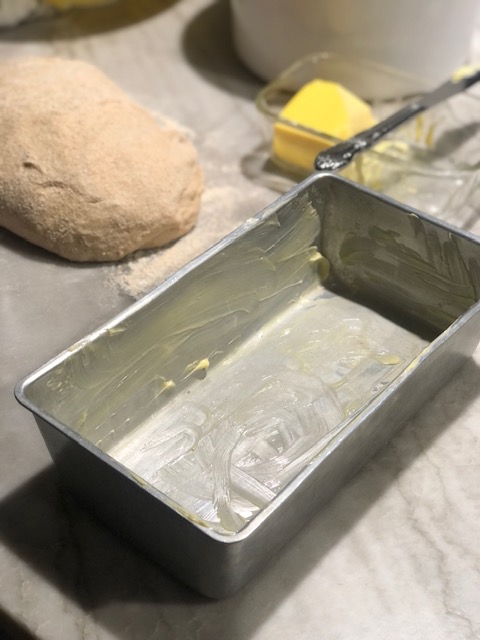
- Grab an 8×4 loaf pan and butter it up. Sprinkle flour on a clean surface and place your dough on it. Form into a loaf and place in pan. Cover again with the same towel and let rise until you see an arch over the pan. You can easily make two loaf pans if you’d prefer smaller loaves.
- Bake for 10 minutes at 425. Then, bake for 45-60 minutes at 325.
Basic Whole Wheat Bread
Ingredients
Method
- Dissolve the yeast in the warm water. Stir until nice and bubbly.
- Mix the flour, lecithin and salt in your bowl. Make a well in the center.
- Add the honey and olive oil to the lukewarm water. Stir together.
- Pour the yeast in the well of the flour and then add the honey/oil mixture. Using your Danish whisk, stir together until everything is combined.
- Now, it’s time to knead the dough. If doing it by hand, it’s about 600 strokes. In a standup mixer, it will take about 10 minutes. Cover with a damp towel and let rise for 1-2 hours. It should double in size.
- With a wet finger, poke a hole into the dough. If the hole doesn’t fill in, you are ready for the next step. If the hole does close up, just let your dough rise a little longer.
- Gently punch down the dough and pull it from the sides, forming a ball. Cover with the same towel and let rise again, usually 30 minutes.
- Grab a 8×4 loaf pan and butter it up. Sprinkle flour on a clean surface and place your dough on it. Form into a loaf and place in pan. Cover again with the same towel and let rise until you see an arch over the pan. You can easily make two loaf pans if you’d prefer smaller loaves.
- Bake for 10 minutes at 425. Then, bake for 45-60 minutes at 325. Enjoy!
Notes
- If you add the olive oil first, the honey will not stick to the measuring spoon. The oil makes it slide right off.
- You can definitely use all-purpose flour. I just prefer the nutritious ingredients in freshly-milled flour.
- If you choose to use other flours as in Einkorn or Khorasan, you’ll need to adjust the water to flour ratios. I’ve learned to play around with flours until I get the right consistency.
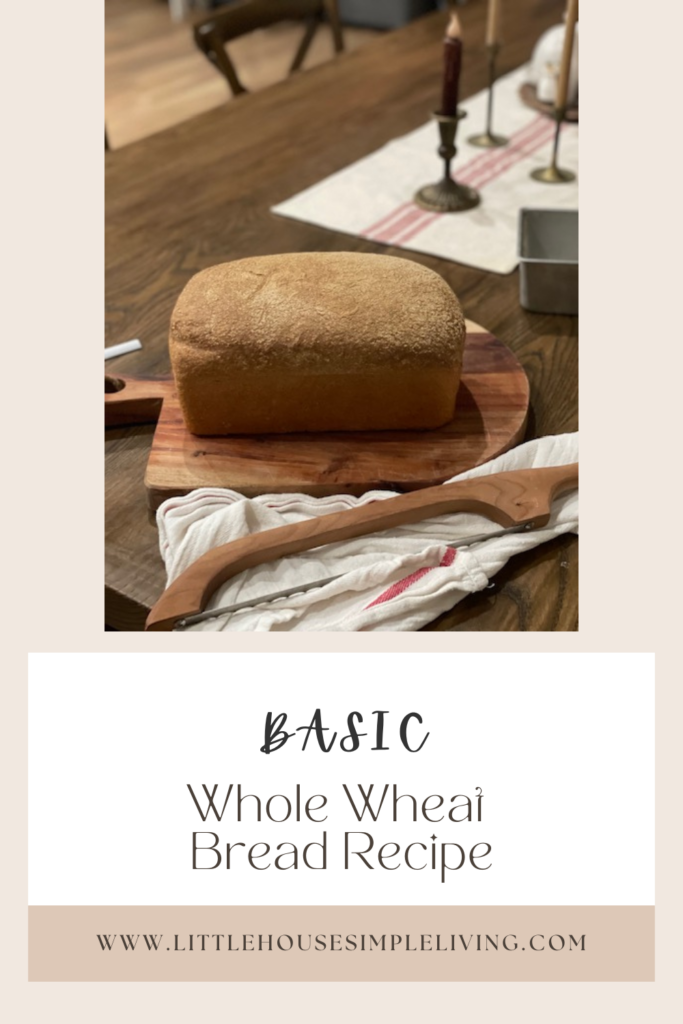
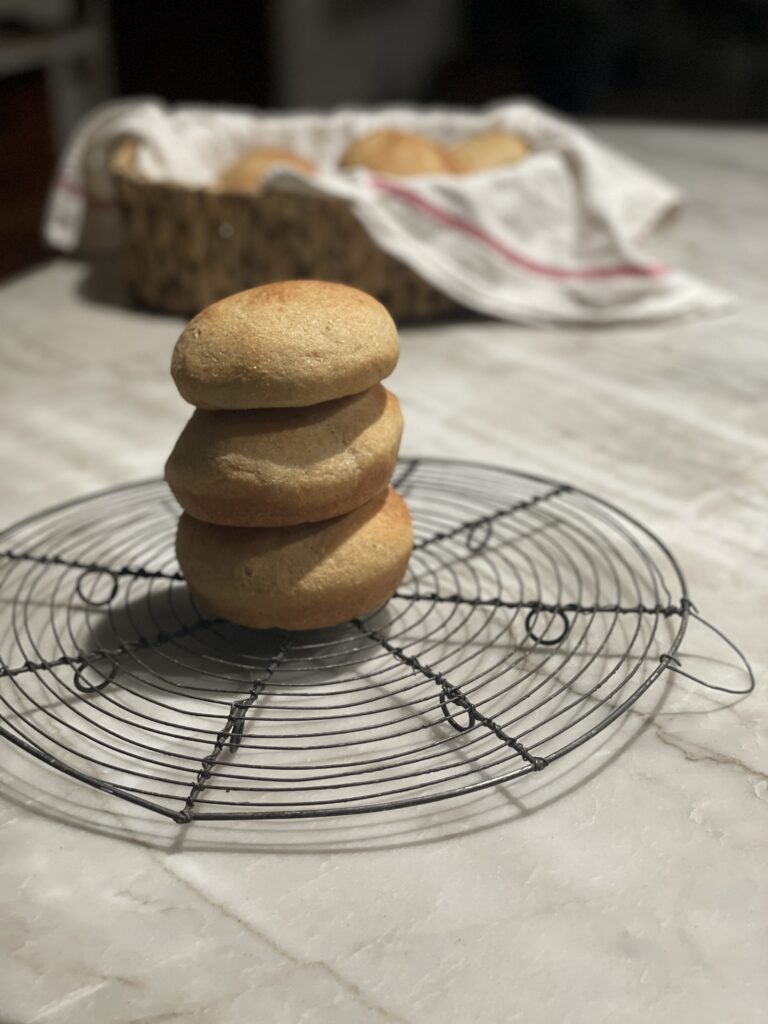
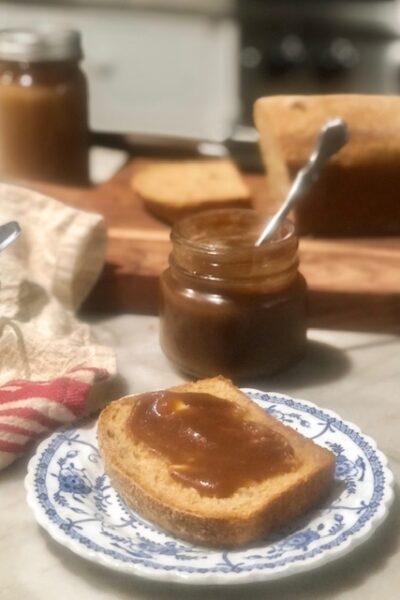
- This recipe make 2 small loaves. However, they won’t be tall like you see in my photos. So, I make 1 loaf and then I end up making 6-8 rolls.
This recipe comes from the book, The Laurel’s Kitchen Bread Cookbook. I’ve adapted the recipe by adding in the lecithin (see above). It just makes the loaf extra fluffy.
Active Dry Yeast Alternative
Although I use active dry yeast a lot when making loaf bread, there’s another option to help your bread rise and ii gives a little more health benefits.
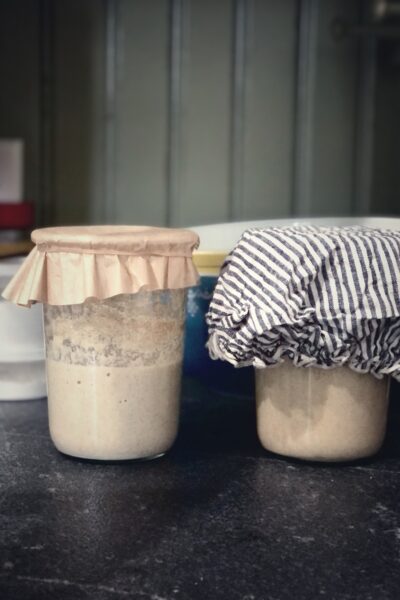
Sourdough bread has been all the rage lately. I’ve been making sourdough bread off and on for about 12 years. I went through periods where I would start my starter and then forget about it and it would die. I know, and I hope I’m not alone. I’m happy to say, my sourdough starter is going on five years now. I’ve been so responsible and fed it when I need to. Also, I add sourdough starters to all kinds of baked goods. Read all about Sourdough Starter HERE.
Grain Mills I Love
There’s several grain mills on the market and I’ve done my research on what works best for me. I’ve been grinding my own flour for 14 years now. I started out with the Wondermill and I love it. I still use it all the time. Unfortunately, it’s been sold out for a while and I will update this post as soon as I hear it’s back in stock.
I have 2 other grain mills I’ve collected over the years. Living in a hurricane state, I have the Wondermill Jr. Manual Mill just in case the power goes out. I could still bake in my gas oven or even outside over a fire. I have the Nutrmill Harvest Mill that I also love using. This one sits out on my counter in my pantry. It’s perfect for quick milling. If you are new to milling your own flour, just start out slow. That’s what I did. My husband actually bought my mills for me over the years for me for Christmas and birthday gifts.
Tools You May Need
Pin For Later
I make a small commission at no extra cost to you.
See my full disclosure here.
Other Fresh Milled Flour Recipes
Lactation Cookies (for the new mama)
Join Our Simple Living Community


Resources
Mohammed H. Anti-inflammatory properties of raw honey and its clinical applications in daily practice. Qatar Med J. 2022 Apr 6;2022(2):27. doi: 10.5339/qmj.2022.fqac.27. PMID: 35909403; PMCID: PMC9284666.
Millman JF, Okamoto S, Teruya T, Uema T, Ikematsu S, Shimabukuro M, Masuzaki H. Extra-virgin olive oil and the gut-brain axis: influence on gut microbiota, mucosal immunity, and cardiometabolic and cognitive health. Nutr Rev. 2021 Nov 10;79(12):1362-1374. doi: 10.1093/nutrit/nuaa148. PMID: 33576418; PMCID: PMC8581649.
Cheng W, Sun Y, Fan M, Li Y, Wang L, Qian H. Wheat bran, as the resource of dietary fiber: a review. Crit Rev Food Sci Nutr. 2022;62(26):7269-7281. doi: 10.1080/10408398.2021.1913399. Epub 2021 May 3. PMID: 33938774.
Kublicki M, Koszelewski D, Brodzka A, Ostaszewski R. Wheat germ lipase: isolation, purification and applications. Crit Rev Biotechnol. 2022 Mar;42(2):184-200. doi: 10.1080/07388551.2021.1939259. Epub 2021 Jul 15. PMID: 34266327.
Whole Grains
https://wholegrainscouncil.org

Wendy Lea Walker, NTP
Nutritional Therapy Practitioner

Leave a Reply